America's Lost Grain: The Hardy Wheat That Survived Ice Ages But Couldn't Survive Industrial Farming
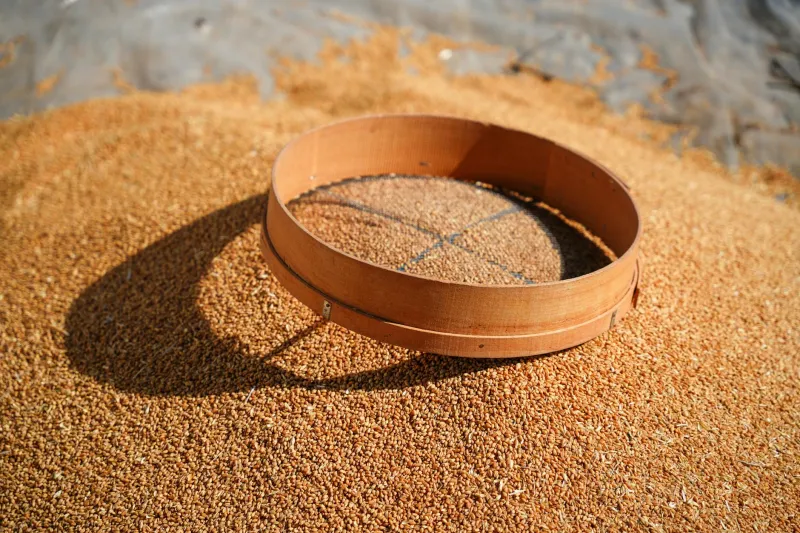
Walk through any American grocery store today, and you'll find dozens of wheat products: white bread, whole wheat pasta, crackers, cereals. What you won't find is any trace of the grain that actually built this country's early food system — a hardy, ancient wheat called emmer that once grew from Montana to Minnesota.
The Grain That Time Forgot
Emmer wheat looks different from the golden waves you see in farm country today. Its kernels are darker, more compact, and wrapped in a tough hull that clings like armor. For good reason: this stuff survived the last Ice Age. While modern wheat varieties need perfect conditions and constant babying, emmer thrives in harsh climates, poor soil, and drought conditions that would kill today's pampered crops.
Early American settlers didn't choose emmer for its convenience — they chose it because it worked. German and Scandinavian immigrants brought emmer seeds across the Atlantic in the 1800s, and it quickly became the backbone of Midwest farming. Unlike today's wheat, which requires extensive processing and chemical inputs, emmer practically grew itself.
"My great-grandfather could plant emmer in spring and forget about it until harvest," says Sarah Chen, a heritage grain farmer in North Dakota whose family has been growing emmer for four generations. "No pesticides, no fertilizer, no worrying about weather. It just grew."
Why America Gave Up the Good Stuff
So what happened? The same thing that happened to dozens of heritage foods in the 20th century: industrial agriculture discovered it could make more money with less flavor.
Modern wheat varieties produce nearly twice as much grain per acre as emmer. They're also easier to process — emmer's protective hull has to be removed in an extra step that commercial mills found annoying. When large-scale farming took over in the 1940s and 50s, efficiency trumped everything else. Emmer went from staple crop to agricultural curiosity in about twenty years.
The nutritional trade-off was massive. Emmer contains 30% more protein than modern wheat, along with higher levels of fiber, magnesium, and antioxidants. Its complex carbohydrate structure means it doesn't spike blood sugar the way refined wheat flour does. But none of that mattered to an industry focused on maximizing yield and shelf life.
The Flavor Nobody Talks About
Here's what the agricultural textbooks won't tell you: emmer tastes incredible. Where modern wheat is bland and neutral, emmer has a rich, nutty flavor with hints of what can only be described as earthiness — like the grain actually remembers the soil it grew in.
Chef Marcus Rodriguez of Portland's acclaimed Grain & Salt restaurant has built his reputation partly on heritage grains like emmer. "When I first tasted emmer flour, I realized what we'd been missing," he says. "Modern wheat is like white noise — it's there, but it doesn't say anything. Emmer has personality."
That personality shows up in everything from pizza dough to pancakes. Emmer pasta has a chewy, satisfying texture that holds sauce better than regular wheat varieties. Emmer bread stays fresh longer and has a complex flavor that makes you actually want to eat it plain.
The Quiet Comeback
While most Americans have never heard of emmer, a small network of heritage grain farmers, artisan millers, and curious chefs are quietly bringing it back. Companies like Bluebird Grain Farms in Washington and Hayden Flour Mills in Arizona now sell emmer flour directly to consumers, often selling out within hours of posting new batches online.
The numbers are still tiny — emmer represents less than 0.01% of American wheat production. But demand is growing fast enough that some farmers are converting fields back to heritage varieties for the first time in decades.
Where to Find It (And What to Do With It)
Emmer flour is showing up in specialty stores and farmers markets across the country, usually priced at about three times the cost of regular flour. Online retailers like Mountain Rose Herbs and Azure Standard carry it regularly, though supplies can be sporadic.
For cooking, emmer flour can substitute for regular wheat flour in most recipes, though it absorbs liquid differently — start with about 10% less liquid than the recipe calls for. The flavor works especially well in hearty breads, pizza dough, and anything where you want the grain to actually contribute to the taste instead of just providing structure.
Emmer berries — the whole grain kernels — can be cooked like rice or barley, making an excellent base for grain bowls or side dishes. They take about 45 minutes to cook but hold their texture well and have a satisfying, chewy bite.
What We Lost and What We're Finding
The disappearance of emmer is really a story about what happens when we optimize for the wrong things. American agriculture got very good at producing lots of cheap grain, but somewhere along the way, we forgot that food is supposed to taste good and nourish us.
Emmer's comeback isn't just about nostalgia or food trends. It's about rediscovering foods that work with our bodies and our environment instead of against them. In a world of processed everything, maybe it's time to remember what real grain actually tastes like.
The next time you're at a farmers market and see a bag labeled "emmer flour," grab it. Your taste buds will thank you — and you'll be eating a piece of American agricultural history that almost disappeared forever.