America's Lost Thanksgiving Sauce Made Cranberries Scary Good — Then Convenience Killed It
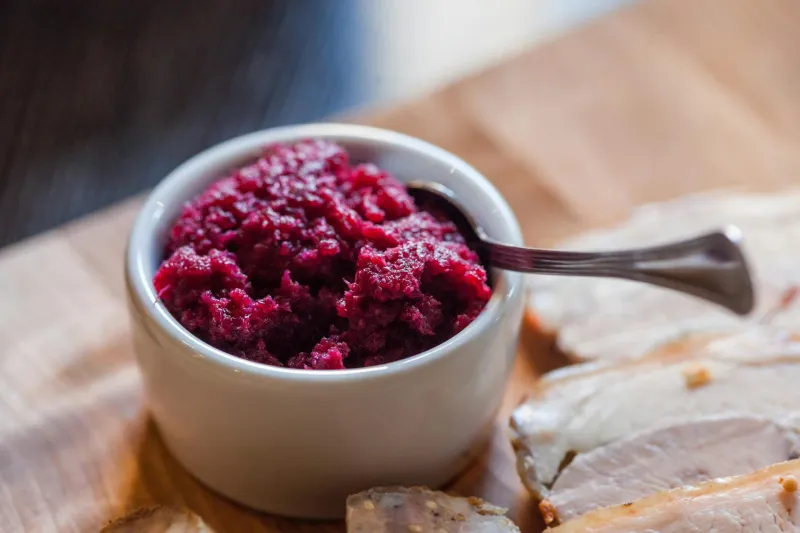
Walk into any grocery store in November, and you'll find the same crimson cylinder sitting in the condiment aisle — Ocean Spray's jellied cranberry sauce, wobbling its way onto millions of Thanksgiving tables. But flip through your great-grandmother's handwritten recipe box, and you'll discover something entirely different lurking in those faded index cards.
The Thanksgiving Sauce That Packed a Punch
Before 1950, American families didn't reach for a can opener when Thanksgiving rolled around. They rolled up their sleeves and made what they called "chutney sauce" — a complex, mouth-watering condiment that turned cranberries into something bold enough to stand up to turkey, stuffing, and whatever else crowded the holiday table.
This wasn't your sweet, smooth cranberry sauce. Picture this instead: fresh cranberries cooked down with sharp horseradish, strips of orange and lemon peel, a splash of vinegar, and warming spices like cinnamon and cloves. Some families added chopped apples or walnuts. Others swore by a touch of grated ginger that made your eyes water in the best possible way.
The result was a condiment with personality — tart, spicy, chunky, and complex. It cut through rich foods like a knife through butter and added layers of flavor that made every bite different from the last.
How America Forgot What Thanksgiving Tasted Like
So what happened? The same thing that happened to homemade bread, hand-churned butter, and pickles made in the basement: convenience won.
World War II changed everything about American cooking. Rationing taught families to rely on shelf-stable products, and the post-war economic boom made processed foods feel modern and sophisticated. When Ocean Spray started mass-producing cranberry sauce in 1941, it solved a real problem — cranberries were seasonal, expensive, and time-consuming to prepare.
But something got lost in translation. The complex, living tradition of chutney sauce — with its regional variations and family secrets — got flattened into a one-size-fits-all product. By 1960, most Americans had never tasted cranberries any other way.
"My grandmother's recipe called for 'a good handful' of horseradish and cooking until it 'smelled right,'" says Maria Santos, a food historian who's been collecting pre-1950 Thanksgiving recipes. "That kind of knowledge doesn't fit on a nutrition label."
The Cookbook Evidence
Dig into American cookbooks from the 1920s and 1930s, and chutney sauce appears everywhere. The 1931 edition of "The Joy of Cooking" includes three different versions. Regional Junior League cookbooks from the era are packed with family variations — some calling for mustard seed, others adding chopped celery or even a splash of bourbon.
These recipes shared a common philosophy: cranberries were just the starting point. The real magic happened when you balanced their tartness against heat, sweetness, and acid. Every family had their own ratio, their own secret ingredient, their own way of knowing when it was done.
Compare that to today's canned cranberry sauce, which contains exactly four ingredients: cranberries, high fructose corn syrup, corn syrup, and water. It's consistent, reliable, and completely predictable — everything that homemade chutney sauce wasn't.
The Comeback Kids
Today, a small but growing group of home cooks and heritage food enthusiasts are digging into old recipe boxes and bringing chutney sauce back to life. Food bloggers document their experiments with great-grandmother's recipes. Farmers markets sell small-batch versions alongside artisanal pickles and fermented vegetables.
"The first time I made my family's old chutney sauce recipe, I understood why my grandfather always complained about store-bought cranberry sauce," says Jennifer Walsh, who runs a heritage cooking blog. "This stuff has backbone. It doesn't just sit there looking pretty — it actually improves the other food on your plate."
The revival makes sense. In an era of artisanal everything, a condiment with this much personality and history feels like a natural fit for modern tables that already feature heritage turkey breeds and heirloom vegetables.
Why It Matters Now
Bringing back chutney sauce isn't just about nostalgia — it's about understanding what we traded away when convenience became king. This forgotten condiment represents a different approach to holiday cooking, one where families created their own traditions instead of buying them off the shelf.
Maybe that's why the revival feels so compelling. In a world of standardized holiday experiences, making your own chutney sauce is a small act of rebellion — a way to taste what Thanksgiving was like before the grocery store decided for us.
Next time you're staring at that familiar red cylinder in the store, remember: your ancestors ate something completely different. And according to those who've tried both, they might have been onto something.