One Chicken, Seven Days: The Depression-Era Kitchen Trick That Beats Any Meal Prep Hack
One Chicken, Seven Days: The Depression-Era Kitchen Trick That Beats Any Meal Prep Hack
Somewhere along the way, we convinced ourselves that meal prep was a modern invention — something born from productivity culture, Instagram, and the Sunday afternoon ritual of portioning quinoa into glass containers. But the real masters of making food stretch across a week weren't influencers. They were home cooks in the 1930s who didn't have a choice.
What they built — almost without naming it — was a sequenced cooking system of quiet brilliance. One chicken. Seven days. Nothing wasted.
Sunday Was the Anchor
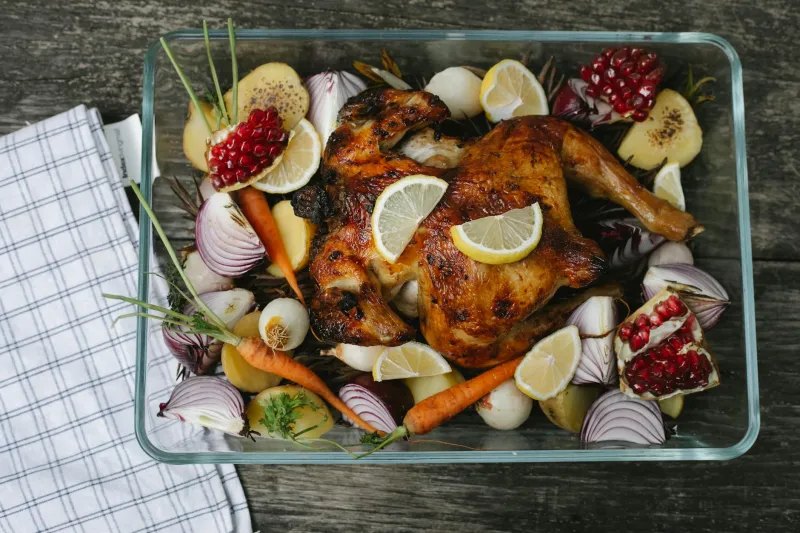
The week started with a whole roast chicken on Sunday. This wasn't accidental. Sunday was typically the day families gathered, the one meal of the week with a little ceremony attached to it. A whole bird on the table meant something. It also meant that everything that followed was already taken care of, whether the family knew it or not.
The roast itself was straightforward — seasoned simply, cooked until the skin crisped and the house smelled like something worth coming home to. But the real strategy began the moment the meal was over. Nothing went in the trash. The carcass was set aside. The drippings were saved. Any meat left on the bones was stripped away and stored.
This wasn't frugality as a philosophy. It was frugality as instinct, drilled in by necessity.
The Week Unfolds
Monday's meal was typically hash — the picked-over chicken meat chopped and crisped in a skillet with potatoes, onion, and whatever vegetables were around. It was fast, filling, and required almost no fresh ingredients. The chicken had already done most of the work.
By midweek, the focus shifted to the carcass. Wednesday was often soup day. The bones went into a pot with water, a halved onion, a few peppercorns, maybe a carrot or celery if the budget allowed. What came out after a few hours of simmering was bone broth — though nobody called it that. They called it stock, or just soup base, and they treated it as the foundation of the second half of the week's cooking.
The broth became the liquid for a vegetable soup. Or it was used to cook rice or dried beans, absorbing flavor as the grains swelled. Or it was the base of a simple pan sauce stretched over bread. The point was that the chicken, in a very real sense, was still feeding the family on Thursday and Friday — it had just changed form.
By Saturday, the kitchen was essentially starting from scratch, ready for the cycle to begin again on Sunday.
The Part We're Throwing Away Too Soon
Here's where modern cooks are leaving real value on the table — or more accurately, dropping it in the garbage can.
The bone broth component of this system wasn't just economical. Nutritionists and food researchers have increasingly noted that slow-simmered bone broth is rich in collagen, gelatin, and trace minerals that are largely absent from the boneless, skinless, pre-portioned chicken products most Americans buy today. The long simmer — three to four hours at a gentle heat — is what draws those compounds out of the bones and into the liquid.
Most people who roast a whole chicken today either throw the carcass away immediately or, if they're feeling ambitious, make a quick 45-minute stock that extracts a fraction of what a proper long simmer would produce. The Depression-era cook, by necessity, did it right. The bones simmered for hours because fuel and time were more available than money, and the result was a nutritionally dense liquid that modern bone broth companies now sell for eight dollars a jar.
You can make it yourself, for free, from something you were about to throw away.
Why the System Still Works
The economic argument is straightforward. A whole chicken — even a good-quality one from a farmers market or a heritage breed producer — typically costs less per pound than boneless chicken breasts. Buying the whole bird and using every part of it, including the carcass, is one of the most efficient things you can do with a grocery budget.
But there's something else worth naming, which is harder to quantify. The sequenced meal system creates a kind of continuity across the week that modern meal planning often lacks. Sunday's roast connects to Monday's hash connects to Wednesday's soup. The meals aren't isolated events — they're a conversation. There's a narrative logic to the week's eating that feels, once you experience it, surprisingly satisfying.
It also forces a certain creativity. When you know the broth is coming and the hash is coming, you start thinking about flavor differently. You season Sunday's roast knowing it'll carry into the hash. You build the soup with an eye toward what it'll become when it's reduced further the next day.
Bringing It Back
You don't need a 1930s household manual to do this. The framework is simple enough to reconstruct from first principles. Roast a whole chicken on Sunday. Strip it clean after dinner and save every bit of meat. Refrigerate the carcass. Make hash on Monday or Tuesday. Start the broth on Wednesday. Use the broth through the end of the week.
That's it. That's the whole system.
What the Depression-era home cook knew, and what we keep rediscovering every time food prices rise or budgets tighten, is that the most sophisticated cooking isn't about technique or equipment. It's about paying attention to what you already have — and refusing to waste any of it.