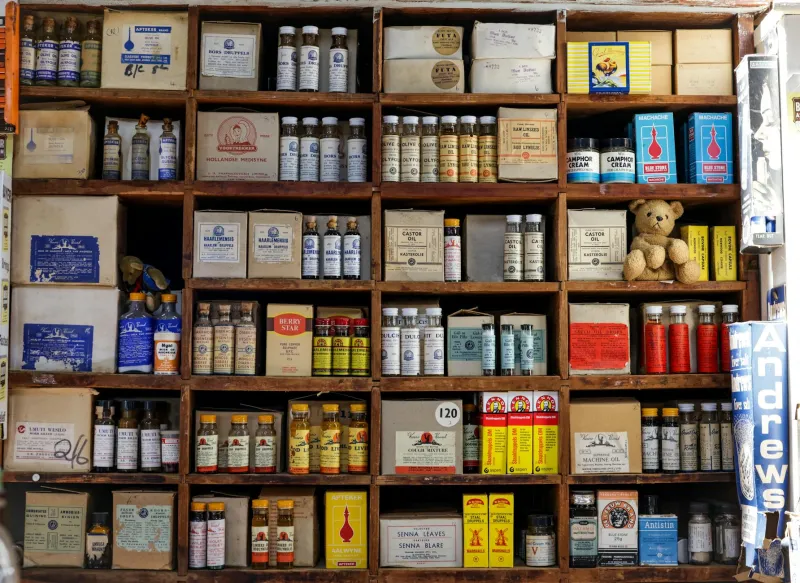
When Your Grandmother's Pantry Was Also Her Pharmacy
Walk into any rural general store in 1920s America, and you'd find something that would puzzle modern shoppers: the same shelves that held flour and sugar also stocked bottles of blackstrap molasses and apple cider vinegar marketed as legitimate health tonics. These weren't quaint folk remedies — they were serious business, complete with detailed dosage instructions and health claims that would make today's FDA lawyers break out in a cold sweat.
For generations before modern pharmaceuticals, American families relied on a surprisingly small arsenal of pantry staples to treat everything from "tired blood" to digestive troubles. What's remarkable isn't just that people believed in these remedies — it's that some of them actually worked.
The Molasses Miracle
Blackstrap molasses, the thick, dark syrup left over from sugar refining, was the heavyweight champion of old-time tonics. General stores sold it with bold claims: "Builds Rich, Red Blood!" and "Nature's Iron Tonic!" Marketing hyperbole aside, these claims weren't entirely wrong.
Modern nutritional analysis reveals that blackstrap molasses is genuinely loaded with iron — about 20% of your daily requirement in just one tablespoon. It's also packed with calcium, magnesium, and potassium. For families dealing with iron-deficiency anemia, especially women and children, a daily spoonful of molasses could make a real difference.
Dr. Sarah Johnson, a nutritionist who studies historical dietary patterns, explains: "These weren't random folk beliefs. Families noticed that the pale, tired kid who started taking molasses got more energetic. They were observing real nutritional deficiencies being corrected."
 Photo: Dr. Sarah Johnson, via farmaquimica.com
Apple Cider Vinegar: The Original Wellness Shot
Long before kombucha and wellness influencers, apple cider vinegar was America's go-to digestive aid. Families kept jugs of the stuff, taking shots before meals or mixing it with water and honey for what they called "switchel" — a refreshing drink that doubled as a health tonic.
Unlike many old-time remedies, apple cider vinegar has actually gained credibility with modern researchers. Studies suggest it can help stabilize blood sugar, aid digestion, and even support weight management. The acetic acid in vinegar appears to slow gastric emptying, which can help people feel full longer and reduce post-meal blood sugar spikes.
The Regulation Revolution
So what happened to these pantry pharmacies? The answer lies in a series of federal regulations that fundamentally changed how Americans thought about food and medicine. The 1938 Federal Food, Drug, and Cosmetic Act gave the FDA new powers to regulate health claims, and suddenly those bottles of molasses and vinegar couldn't legally promise to cure anything.
This wasn't necessarily a bad thing — plenty of dubious patent medicines got swept away in the same regulatory tide. But legitimate, traditional remedies got caught in the crossfire. Companies could still sell molasses and vinegar, but they couldn't tell customers about their potential health benefits.
What the Science Says Now
Modern research is quietly validating some of these old-fashioned approaches. Take cod liver oil, another general store staple that promised to prevent rickets and boost immunity. We now know it's loaded with vitamins A and D — nutrients that were genuinely deficient in many American diets before food fortification became standard.
Or consider the tradition of drinking bone broth during illness. Dismissed for decades as mere comfort food, bone broth is now recognized as a source of glycine and other amino acids that may support immune function and gut health.
Even some of the stranger remedies are getting second looks. Elderberry syrup, once sold in general stores as a cold remedy, has shown promise in clinical trials for reducing the duration and severity of flu symptoms.
The Quiet Renaissance
Today, you'll find some of these old remedies making a comeback, though usually without the bold health claims of their predecessors. Health food stores sell apple cider vinegar "with the mother" (the beneficial bacteria culture), and blackstrap molasses appears in smoothie recipes and wellness blogs.
The difference is context. Instead of replacing modern medicine, these traditional remedies are being repositioned as nutritional supplements — ways to fill gaps in our diets rather than cure diseases.
What We Can Learn From the General Store
The story of America's pantry pharmacy isn't just about nostalgia for simpler times. It's about recognizing that our ancestors weren't naive — they were observant. When families noticed that certain foods made them feel better, they were often identifying real nutritional relationships that science would later validate.
The tragedy isn't that regulation ended the era of medicinal molasses. It's that we lost the knowledge along with the marketing claims. Somewhere between dismissing folk medicine as superstition and embracing modern pharmaceuticals, we forgot that food and health have always been connected.
The next time you're in the grocery store, take a moment to appreciate the humble bottles of vinegar and molasses on the shelves. They may not carry health claims anymore, but they're still carrying on a tradition that's older than the FDA — and sometimes just as effective.