The Vinegar Jar That Lived on Every Kitchen Counter — Until Big Food Made Us Forget
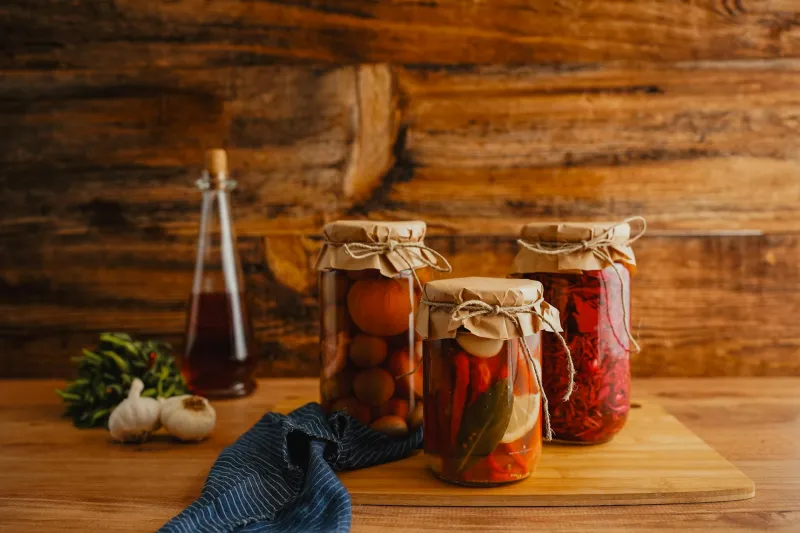
Walk into any Southern diner that's been around since the 1950s, and you might spot something unusual next to the sugar dispenser: a small glass jar filled with what looks like murky water and floating pepper flakes. That's pepper vinegar, and it used to be as common on American tables as ketchup is today.
The Condiment Every Family Made
Before Tabasco became a household name and long before sriracha conquered millennial kitchens, American families — particularly in the South and Midwest — kept small vessels of pepper vinegar on their dining tables year-round. The recipe was dead simple: pack hot peppers into a jar, cover with white vinegar, and wait a few weeks for the magic to happen.
Unlike the thick, complex hot sauces we know today, pepper vinegar was pure liquid heat with a sharp, clean bite. A few drops could wake up everything from greens and beans to cornbread and fried chicken. The beauty was in its restraint — it added fire without masking flavors.
"My grandmother always had a Mason jar of it sitting right next to the salt," says James Beard Award-winning chef Sean Brock, who's been instrumental in reviving forgotten Southern foodways. "She'd put peppers in there at the beginning of summer, and by fall, it was liquid gold."
Why Every Household Had a Jar
The popularity of pepper vinegar made perfect sense in pre-refrigeration America. Vinegar was a pantry staple used for preservation, and most families grew their own peppers. When the pepper harvest came in, making pepper vinegar was as routine as canning tomatoes.
More importantly, it solved a practical problem. Fresh hot peppers don't keep well, but their heat and flavor could be captured indefinitely in vinegar. Families could enjoy the fire of their summer pepper crop all winter long, adding just enough kick to make bland winter meals interesting.
Historical cookbooks from the 1800s rarely bothered to include recipes for pepper vinegar — it was so universally known that writers assumed every cook already made it. When recipes did appear, they were usually variations: some families preferred cayenne peppers, others used whatever grew in their gardens. Some added garlic or herbs.
The Slow Disappearance
So what happened to this ubiquitous condiment? The same thing that happened to many homemade staples: industrialization made store-bought alternatives more convenient.
Tabasco sauce, first bottled commercially in 1868, offered consistent heat and flavor without the wait time. As grocery stores expanded their condiment aisles in the early 1900s, families gradually stopped making their own pepper vinegar. Why wait weeks for peppers to infuse when you could buy a bottle of hot sauce?
The shift accelerated after World War II, when suburban families increasingly embraced convenience foods. Making pepper vinegar required planning ahead and keeping track of jars — luxuries that busy households started abandoning.
"The food companies didn't actively kill pepper vinegar," explains food historian Michael Twitty. "They just made it irrelevant by offering something that seemed easier."
The Quiet Revival
Today, pepper vinegar is experiencing a quiet renaissance among chefs and home cooks who've discovered its unique properties. Unlike thick hot sauces, pepper vinegar doesn't coat food — it penetrates it. The vinegar's acidity brightens flavors while the pepper heat builds gradually.
Restaurants like Husk in Charleston and The Grey in Savannah keep house-made pepper vinegar on every table, introducing diners to a taste their great-grandparents would recognize instantly. Home cooks are rediscovering how a few drops can transform everything from pizza to scrambled eggs.
Making Your Own Liquid Fire
Reviving pepper vinegar in your own kitchen couldn't be simpler. Pack 6-8 small hot peppers (cayenne, serrano, or Thai chilies work well) into a clean 8-ounce jar. Cover completely with white vinegar, leaving about half an inch of headspace. Cap tightly and let sit at room temperature for 2-3 weeks, shaking occasionally.
The result is a clear, fiery liquid that keeps indefinitely. Start with just a few drops — pepper vinegar packs more heat than you'd expect from something so simple-looking.
More Than Just Heat
What makes pepper vinegar special isn't just its historical significance — it's genuinely useful. The vinegar base makes it perfect for brightening rich, heavy foods. Try it on mac and cheese, drizzled over cornbread, or splashed into pot likker. It's particularly magical on anything fried, cutting through grease while adding fire.
In a world of increasingly complex condiments with ingredient lists longer than grocery receipts, pepper vinegar feels like a revelation. Two ingredients, infinite possibilities, and a direct connection to the way Americans used to eat.
Some traditions disappear for good reason. Others, like pepper vinegar, just got temporarily forgotten in the rush toward convenience. Sometimes the simplest solutions — the ones our ancestors figured out long ago — are still the best ones.