The Restaurant That Never Stopped Moving
Imagine trying to prepare a five-course dinner for 50 people while your kitchen rocks back and forth, traveling at highway speeds through the American countryside. Now imagine doing it with such consistency and excellence that passengers planned their travel around your meal service. This was the daily reality for Pullman dining car chefs, who created America's first truly standardized fine dining experience — all while working in galleys barely larger than a modern food truck.
From the 1880s through the 1960s, these rolling restaurants served meals that rivaled the best hotel dining rooms, complete with white tablecloths, multiple courses, and service that would make today's upscale establishments envious. Yet the chefs who made it possible — predominantly Black men trained in a rigorous apprentice system — remained largely invisible to the dining public.
The Pullman Standard
George Pullman didn't just revolutionize train travel with his luxury sleeping cars — he accidentally created America's first restaurant chain. Pullman Company dining cars operated under strict standards that ensured a passenger boarding in Chicago would receive the same quality meal as someone dining in San Francisco.
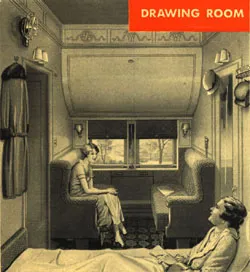 Photo: Pullman Company, via www.railswest.com
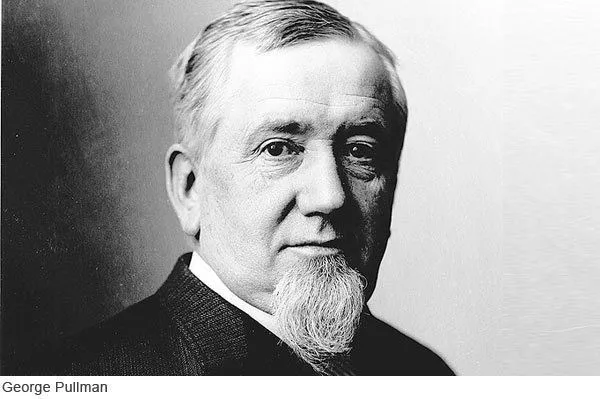 Photo: George Pullman, via alchetron.com
The menus were sophisticated by any era's standards: fresh oysters, prime steaks, elaborate desserts, and seasonal specialties that changed based on regional availability. Chefs were required to source ingredients at stops along the route, creating relationships with local suppliers that often lasted decades.
What made this remarkable was the consistency. Unlike independent restaurants, where quality varied wildly based on the owner's commitment or the cook's mood, Pullman dining cars maintained exacting standards across thousands of miles and dozens of routes. Passengers knew exactly what to expect, creating a level of brand reliability that wouldn't be seen again until the rise of modern chain restaurants.
The Invisible Culinary Masters
The chefs who made this system work were products of one of America's most rigorous culinary training programs, though it was never called that. Pullman hired experienced cooks and put them through an intensive apprenticeship that covered everything from knife skills to inventory management to the physics of cooking on a moving train.
These men — and they were almost exclusively men — learned to work in spaces that would challenge even experienced professional chefs. The galley kitchen on a typical dining car measured roughly 6 feet by 20 feet, yet it had to accommodate equipment for grilling, roasting, frying, and baking. Storage was limited, refrigeration was primitive, and every surface had to be secured against the constant motion of the train.
The skill required was extraordinary. Chefs had to time multiple dishes perfectly while accounting for the train's speed, upcoming curves, and scheduled stops. They learned to read the rhythm of the rails, adjusting their cooking techniques based on whether the train was accelerating, cruising, or approaching a station.
Setting the Template for American Service
Pullman dining cars established service standards that influenced American restaurants for generations. The concept of courses arriving in precise timing, the emphasis on presentation, the idea that dining should be an experience rather than just fuel — these weren't European imports but American innovations developed in the unique environment of the rails.
The service style was distinctly American: more casual than European fine dining but more refined than typical American fare. Waiters were trained to be attentive without being intrusive, knowledgeable about the menu without being pretentious. This balance became the template for American restaurant service that persists today.
The dining car also pioneered the idea of regional American cuisine. Chefs were encouraged to incorporate local specialties and seasonal ingredients, creating menus that reflected the geography the train was crossing. A passenger might enjoy Pacific salmon in Washington, beef in Montana, and citrus in California — all prepared to the same high standards.
The Great Disappearing Act
The decline of passenger rail service in the post-war era meant more than just empty tracks — it meant the loss of a culinary tradition that had shaped American dining for nearly a century. As airlines took over long-distance travel and highways enabled car culture, the dining car became an anachronism.
Many of the chefs who had spent their careers perfecting the art of mobile fine dining found themselves without a clear career path. Some opened restaurants, bringing their exacting standards to stationary kitchens. Others joined hotel chains or country clubs. But their specific expertise — the ability to create excellent food under the most challenging conditions — was largely lost.
Food historians are only now beginning to recognize the influence these chefs had on American cuisine. Their emphasis on consistency, their integration of regional ingredients, their service innovations — these became foundational elements of American restaurant culture, even as their creators remained uncredited.
Lessons for Modern Kitchens
Today's restaurant industry, obsessed with efficiency and consistency, could learn from the dining car tradition. These chefs achieved both while working under conditions that would defeat most modern kitchen teams. They did it through rigorous training, careful planning, and an understanding that limitations often spark creativity rather than hinder it.
The farm-to-table movement that dominates modern fine dining? Dining car chefs were sourcing locally out of necessity, building relationships with suppliers along their routes decades before it became trendy. The emphasis on seasonal menus? They were changing their offerings based on what was available at each stop.
Even the current fascination with open kitchens and chef-driven restaurants echoes the dining car experience, where the constraints of space meant diners could often see into the galley, watching their meals being prepared with skill and precision.
The Rolling Revolution
The next time you sit down for a carefully plated meal at a respected restaurant, remember the chefs who pioneered that experience while traveling at 60 miles per hour. They proved that excellence isn't about having the perfect conditions — it's about mastering whatever conditions you're given.
Their legacy lives on in every restaurant that prioritizes consistency, every chef who sources locally, and every dining experience that treats food as more than mere sustenance. They just did it first, and they did it while the ground was moving beneath their feet.