The Living Heirloom: How Sourdough Starters Became America's Most Stubborn Family Tradition
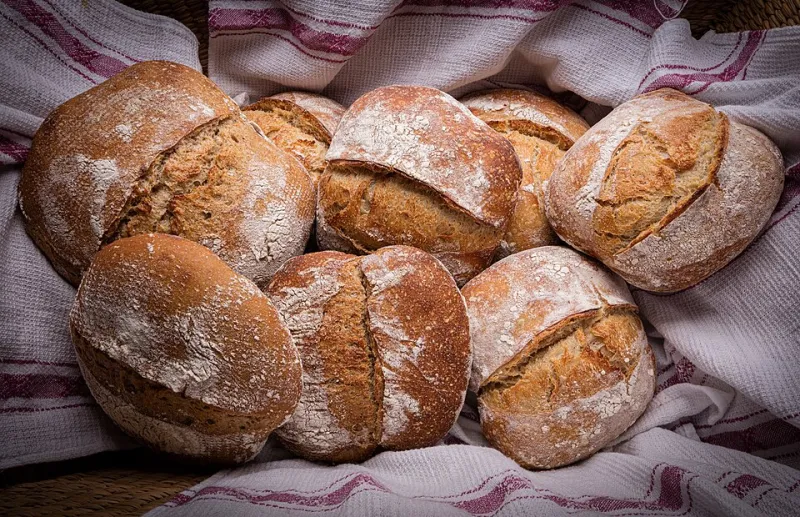
Photo: Tomascastelazo, CC BY-SA 4.0, via Wikimedia Commons
The One Kitchen Tradition That Refused to Go Quietly
Somewhere in a refrigerator in Portland, Oregon, there's a jar of starter that a woman named Deborah claims is sixty-three years old. Her mother kept it. Her grandmother kept it before that. Every week, Deborah pulls it out, feeds it a little flour and water, watches it bubble, and puts it back. She's done this through three moves, two divorces, and a kitchen fire that took most of her cookware.
She lost the cast iron. She kept the starter.
This isn't a quirky exception. Across the United States, sourdough cultures have outlasted virtually every other fermented food tradition that once lived in American kitchens. The vinegar crocks disappeared. The lacto-fermented vegetable jars got replaced by store-bought pickles. The ginger beer plants dried up and were thrown away. But sourdough starters — these weird, slightly funky, living blobs of flour and wild yeast — just kept going. And the pandemic revival of home baking in 2020 only made their comeback more dramatic, introducing millions of new Americans to something that, it turns out, was never really gone.
So why this? Why did sourdough survive when everything else didn't?
What's Actually Living in That Jar
A sourdough starter is, technically, a microbial ecosystem. Wild yeasts — mostly Saccharomyces cerevisiae and its wilder cousins — coexist with lactic acid bacteria like Lactobacillus strains in a self-regulating community that's been doing its thing for millennia. The yeast provides the leavening. The bacteria produce the acids that give sourdough its characteristic tang. Together, they create an environment hostile enough to most pathogens that a healthy starter is remarkably self-protecting.
Here's the part that gets genuinely strange: the microbial community in a sourdough starter is partly shaped by its environment. The flour you use, the water, the ambient temperature of your kitchen, even the bacteria on your hands — all of it influences who's thriving in that jar. Researchers at North Carolina State University found that starters from different regions of the world harbor measurably different microbial communities. A San Francisco starter really is different from one kept in Brooklyn, not because of some romantic notion, but because the local wild yeasts that colonized it reflect where it actually lives.
That means your starter is, in a very real sense, yours. It's a biological artifact of your kitchen, your habits, your geography. No commercial product can replicate that.
Before Commercial Yeast Changed Everything
For most of American history, sourdough wasn't a specialty item — it was just how bread got made. Commercial yeast didn't become widely available until the mid-nineteenth century, and even then, it spread slowly. Before that, every household that baked bread maintained a starter, whether they called it that or not. They called it the "leaven," the "sponge," the "old dough." Frontier families carried starters west in their wagons. Gold Rush miners in California were nicknamed "sourdoughs" because they slept with their starters tucked inside their bedrolls to keep them warm enough to work.
When Fleischmann's and other commercial yeast companies arrived, they sold convenience — and they sold it brilliantly. Why fuss with feeding a starter when you could just buy a packet? By the mid-twentieth century, homemade leavening had become a relic. Most American families stopped maintaining starters entirely.
Except some didn't. And that stubborn minority kept the tradition alive long enough for the rest of the country to find its way back.
Why These Particular Heirlooms Survived
Kitchen anthropologists and food historians have a few theories about sourdough's unusual staying power. One argument is purely practical: a starter is cheap to maintain and genuinely useful. Unlike, say, a crock of fermented beets, a sourdough starter produces something central to everyday life. Bread. Pancakes. Waffles. Pizza dough. The ongoing utility kept people engaged in a way that more niche ferments couldn't.
But there's a more interesting theory, and it has to do with the psychology of caregiving. A starter requires attention in a way that a bottle of vinegar or a can of yeast simply doesn't. You have to feed it. You have to notice whether it's happy or sluggish. You develop, whether you mean to or not, a relationship with it. People name their starters — "Carl," "Gretchen," "Old Reliable" — with a frequency that suggests something deeper than irony. When you've been feeding something for years, throwing it away starts to feel like a small act of violence.
That emotional attachment transfers across generations in a way that most kitchen knowledge doesn't. You can describe how your grandmother made biscuits, but the actual technique lives only in memory. A starter is the thing itself — a literal, biological continuity with the past.
The Resurgence That Wasn't Really a Surprise
When pandemic lockdowns hit in 2020 and flour disappeared from grocery store shelves, the sourdough revival made headlines as though it were a sudden trend. But bakers who'd been paying attention knew better. Interest in heritage starters had been quietly building for a decade, driven partly by the broader fermentation revival championed by writers like Sandor Katz, and partly by a growing unease with industrial food systems.
What 2020 did was compress a slow-building movement into a few frantic months. Suddenly everyone wanted a piece of a friend's starter. Facebook groups dedicated to sourdough cultures ballooned to hundreds of thousands of members. People mailed starters across the country in insulated envelopes, dried and powdered for safe transit.
The Carl Griffith Sourdough Circle, a nonprofit that has been freely distributing a starter traced to Oregon Trail-era origins since the 1990s, reported shipping requests that overwhelmed their volunteers. A starter that had been quietly circulating among a small community of enthusiasts for decades suddenly had a waiting list.
What It Actually Means to Keep Something Alive
There's a reason sourdough revival stories tend to feel a little emotional, even when the writers aren't trying to make them that way. We live in an era of frictionless replacement — if something breaks or runs out, you order another one. The starter is an explicit rejection of that logic. It can't be replaced. It can only be continued.
Deborah in Portland doesn't bake every week. Some weeks the starter just gets fed and put back. But she keeps it going because, as she puts it, "stopping would feel like forgetting something important on purpose."
That's not nostalgia, exactly. It's something more specific: the recognition that some things are worth the small, recurring effort of keeping them alive. The starter figured that out long before we did. It's been waiting for us to catch up.