The Steakhouse Secret That Vanished from Every Table in America
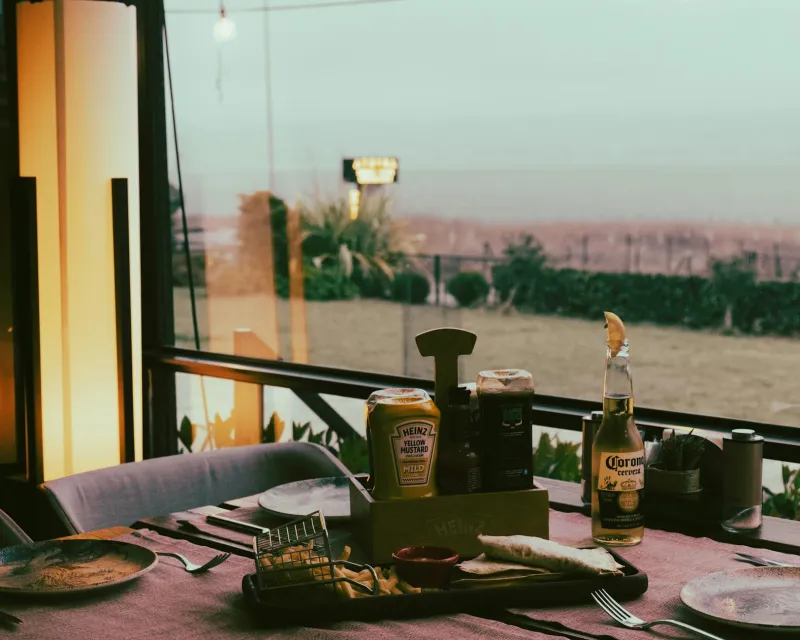
Walk into any steakhouse today and you'll find the usual suspects: A.1., Heinz 57, maybe some horseradish if you're lucky. But flip through a 1950s restaurant menu or peek at old dining room photos, and you'll spot something that's been scrubbed from American food memory — small bottles of Harvey's Sauce sitting proudly next to the salt and pepper.
This wasn't some regional oddity. From the mahogany-paneled steakhouses of Manhattan to the cattle town joints of Kansas City, Harvey's Sauce was as essential to the American steak experience as a sharp knife and a cold beer. Then, somewhere between the rise of chain restaurants and our collective retreat from bold flavors, it simply vanished.
The Sauce That Started a Revolution
Harvey's Sauce began its life in 1807 England, created by Lazenby & Son as a fierce competitor to Worcestershire sauce. But while Worcestershire played it relatively safe with its tangy-sweet profile, Harvey's went full throttle — anchovy-forward, vinegar-sharp, and unapologetically intense. It was the kind of condiment that didn't just complement your steak; it announced its presence from across the table.
American importers brought Harvey's stateside in the mid-1800s, where it found an eager audience among a dining culture that hadn't yet learned to fear strong flavors. By the early 1900s, domestic sauce makers were creating their own Harvey's-style condiments, flooding the market with variations that all shared that distinctive anchovy bite.
"It was the sophisticated choice," explains food historian Sarah Chen, who's spent years tracking forgotten American condiments. "Ordering Harvey's with your steak was like wearing a good suit — it showed you knew what you were doing."
America's Bold Flavor Era
The Harvey's heyday coincided with what food historians now recognize as America's "bold flavor era" — roughly 1920 to 1960. This was when cocktail culture embraced bitter Campari, when home cooks regularly stocked anchovy paste, and when restaurants weren't afraid to serve dishes that challenged diners' palates.
Steakhouses were the epicenter of this movement. These weren't the sanitized chain operations we know today, but independent establishments where waiters wore real bow ties and knew your preferred table. Harvey's Sauce fit perfectly into this world — it was complex, uncompromising, and required a certain level of culinary confidence to appreciate.
"You'd see businessmen debate the merits of different Harvey's brands the way people argue about bourbon today," says James Morrison, whose grandfather owned three steakhouses in Chicago during the 1940s. "It wasn't just condiment; it was part of the ritual."
The Great Simplification
So what happened? The same forces that transformed American dining in the latter half of the 20th century: standardization, risk aversion, and the pursuit of mass appeal.
As independent restaurants gave way to chains, bold regional flavors got steamrolled by focus groups and corporate test kitchens. Harvey's Sauce, with its assertive anchovy character and acquired-taste profile, was exactly the kind of polarizing product that corporate dining couldn't tolerate.
"Chains needed condiments that offended absolutely no one," explains restaurant consultant Maria Rodriguez. "Harvey's was too distinctive, too challenging. It didn't fit the new model of dining as entertainment rather than experience."
The final blow came from changing American tastes themselves. Post-war prosperity brought a shift toward sweeter, milder flavors. The same generation that embraced Wonder Bread and Velveeta wasn't particularly interested in anchovy-forward steak sauces. By the 1970s, Harvey's had largely disappeared from American tables, remembered only by a shrinking cohort of old-school diners.
The Underground Revival
But here's where the story gets interesting. In high-end kitchens across the country, a quiet Harvey's revival has been brewing. Chefs who've spent years perfecting their craft are rediscovering what their predecessors knew: sometimes the best way to complement a great piece of beef is with something that doesn't back down.
"I started making my own Harvey's-style sauce about five years ago," says Chef David Kim of Portland's acclaimed steakhouse, Prime Cut. "Customers were skeptical at first — it's definitely not A.1. But once they try it, they get it. It doesn't mask the meat; it elevates it."
The revival isn't limited to restaurants. Home cooks are tracking down vintage Harvey's recipes online, experimenting with anchovy-forward condiments that would have been familiar to their great-grandparents. Food forums buzz with debates about the best anchovy-to-vinegar ratios, and specialty food stores are starting to stock Harvey's imports again.
Why It Matters Now
The Harvey's story isn't just about condiments — it's about what we've lost in our rush toward universal appeal. In an era when every chain restaurant serves the same focus-grouped flavors, there's something revolutionary about rediscovering tastes that actually challenge our palates.
"We've trained ourselves to expect bland," notes food writer Tom Patterson. "Harvey's reminds us that food used to have personality, even when it came in a small bottle next to your steak."
The next time you're grilling a good piece of beef, consider seeking out some Harvey's Sauce — or making your own anchovy-forward version. Your taste buds might need a moment to adjust, but they'll thank you for the reminder of what bold flavor actually tastes like.
After all, if it was good enough for America's golden age of steakhouses, it might just be exactly what your dinner table has been missing.