The Butcher Counter's Best-Kept Secret: Cheap Cuts That Outflavor Everything Around Them
The Butcher Counter's Best-Kept Secret: Cheap Cuts That Outflavor Everything Around Them
Somewhere between the ribeyes and the New York strips, there are cuts of beef sitting in the case that cost half as much, taste just as good — and in some cases better — and get passed over every single day because their names sound vaguely industrial. The hanger steak. The flat iron. The chuck flap. The bavette.
These aren't mystery cuts or butcher tricks. They're legitimate pieces of the animal with real flavor and real history. The reason most American shoppers don't know them isn't because they're inferior. It's because the American meat industry spent decades making sure you didn't have to.
How America Learned to Ignore Half the Cow
After World War II, American beef production scaled up enormously, and with that scale came a push toward standardization. Supermarkets wanted cuts that were uniform, easy to portion, and simple to explain to shoppers who were increasingly buying meat under fluorescent lights rather than from a neighborhood butcher who could walk them through options.
That system worked great for the tenderloin, the ribeye, and the strip — cuts that are naturally tender, look impressive in a case, and don't require much explanation. It worked less well for cuts that needed a little knowledge to prepare correctly, or that came from parts of the animal with more connective tissue and muscle activity. Those cuts got ground into hamburger, turned into stew meat, or simply labeled in ways that didn't inspire confidence.
Meanwhile, French boucheries kept selling the onglet (hanger steak) as a prized bistro cut. Argentine parrilla cooks kept grilling the vacío (flank area) over open fire. Mexican carnicerías kept slicing the arrachera (skirt steak) thin for carne asada. The rest of the world never stopped using these cuts — they just didn't make it onto the menu at American chain restaurants, so most people here never learned to ask for them.
The Cuts Worth Knowing
The Hanger Steak is probably the most famous of the overlooked group, though "famous" is relative — plenty of home cooks still draw a blank when they hear the name. It hangs (hence the name) between the rib and the loin, doing almost no work during the animal's life, which means it's naturally tender despite coming from a working part of the body. The flavor is deeply beefy, almost minerally, with a grain that runs in two directions from a central sinew your butcher can remove. French butchers called it the "butcher's steak" because they supposedly kept it for themselves rather than selling it. That reputation is earned.
The Flat Iron comes from the shoulder — the chuck — which is generally associated with tough, slow-cook cuts. But the flat iron is a muscle that sits above the shoulder blade and does relatively light work. Once a butcher removes the tough connective tissue that runs through its center (a technique that was only formally developed in the early 2000s by researchers at the University of Nebraska, which is a genuinely strange fact), what's left is one of the most tender cuts on the animal, with a rich flavor that holds up well to high-heat cooking. It's almost always cheaper than a strip steak.
The Chuck Flap (sometimes called chuck flap tail or chuck short rib meat when it's cut differently) is less well-known but increasingly popular at Japanese yakiniku restaurants, where it's grilled thin over high heat and prized for its intense marbling and fat content. It's the kind of cut that makes you wonder why it isn't everywhere.
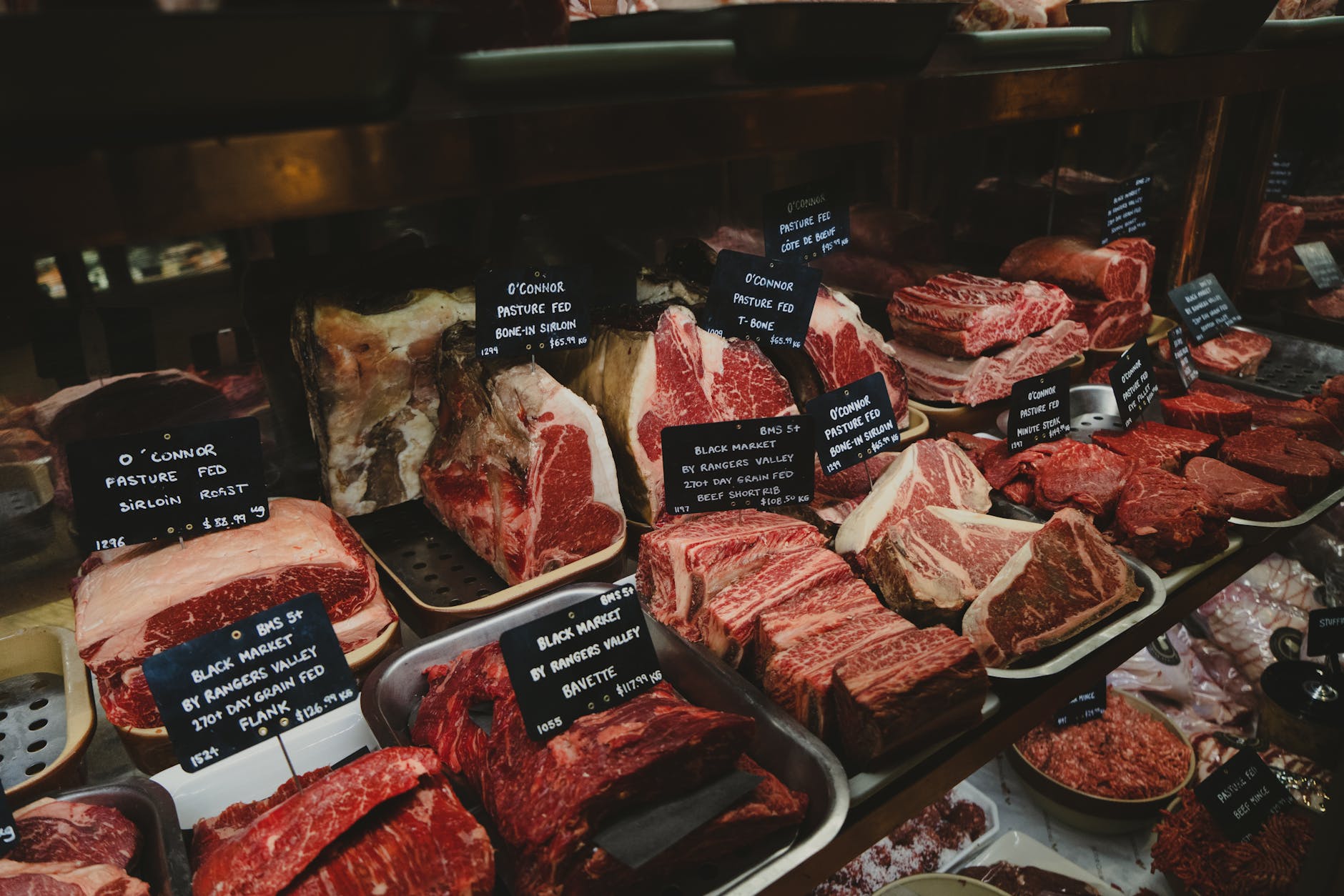
The Bavette (also called sirloin flap or flap steak) is a loose-grained, well-marbled cut from the bottom sirloin that takes a marinade extraordinarily well and cooks fast over high heat. Slice it against the grain and it eats like a much more expensive piece of meat.
What to Actually Say at the Counter
Here's the practical part. A lot of these cuts aren't sitting in the case because stores don't bother breaking them out — they're easier to grind or sell as bulk packages. But a real butcher counter, or any shop with an actual butcher behind it, can usually get you what you want if you know how to ask.
For hanger steak: just ask for it by name. Most butchers know it. If they say they don't have it, ask if they have "butcher's steak" or "hanging tender."
For flat iron: ask for it specifically. Some stores already carry it pre-packaged because it's gotten enough attention in the last decade. If not, ask if they can cut it from the chuck.
For bavette or sirloin flap: this one sometimes requires a little more explanation. You can describe it as the flap meat from the bottom sirloin, or ask if they have anything from that area they'd recommend for high-heat grilling.
The magic phrase, honestly, is just: "What do you have that's underrated right now?" A good butcher will light up at that question.
Cook Them Right and They'll Embarrass Your Ribeye
Most of these cuts share a few things in common when it comes to cooking. They want high heat and they don't want to be overcooked — medium-rare to medium is the window, and medium-well will make them chewy and sad. Let them rest after cooking, slice against the grain (this is non-negotiable for bavette and hanger), and don't overcomplicate the seasoning. Salt, pepper, a hot cast iron or a live fire, and a little butter at the end is a complete sentence.
The other thing they share is that they reward curiosity. These cuts exist in a part of the food world where most shoppers never wander, and that's the only reason they're still affordable. The ribeye is expensive because everyone knows it's good. The hanger steak is cheap because most people walk right past it.
That gap won't last forever. But for now, it's one of the better deals left at the grocery store.