America's Funkiest Bread Had a Smell Problem — Now It's Having a Moment
The Bread That Cleared Rooms and Won Hearts
Walk into a kitchen where salt-rising bread is fermenting, and you'll understand immediately why this once-beloved American staple almost disappeared. The smell hits you like a wall — pungent, funky, somewhere between aged cheese and old socks. Your first instinct might be to check if something's gone bad. But stick around, and you'll witness one of American baking's most fascinating comebacks.
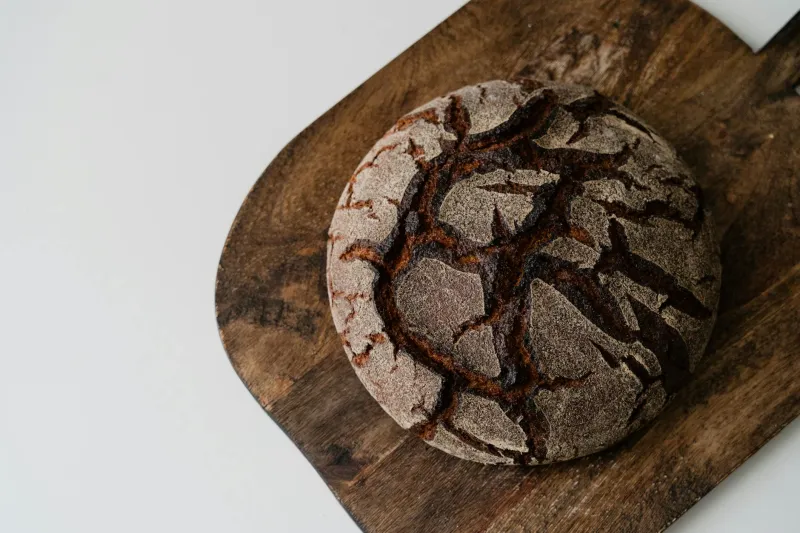
Salt-rising bread doesn't actually contain salt as a rising agent, despite the name. Instead, it relies on wild bacteria captured from cornmeal and potatoes to create a starter that produces hydrogen sulfide gas — the same compound that gives rotten eggs their notorious smell. The result is a bread with an incredibly complex flavor profile: tangy, slightly sweet, with a dense crumb and a crust that stays tender for days.
When America's Kitchens Smelled Different
Before the 1950s, salt-rising bread was a weekly ritual in homes across Appalachia and the rural Midwest. Every Thursday or Friday, depending on family tradition, grandmothers would start their starters, filling entire houses with that unmistakable aroma. The bread was practical — it didn't require commercial yeast, which was expensive and often unavailable in remote areas. Instead, it relied on naturally occurring bacteria that could be cultivated from basic pantry ingredients.
The process demanded patience and skill. Bakers had to maintain precise temperatures, usually by wrapping their starters in towels and placing them near wood stoves or in barely warmed ovens. The timing was critical — too hot and the bacteria would die, too cool and nothing would happen. Successful salt-rising bread was a badge of honor, a skill passed down through generations of women who understood the temperamental nature of wild fermentation.
The Great White Bread Takeover
Commercial sliced bread didn't just change American eating habits — it nearly killed regional bread traditions entirely. When Wonder Bread and its competitors promised convenience, consistency, and a neutral flavor that wouldn't offend anyone, salt-rising bread's funky personality suddenly seemed like a liability.
The post-war boom accelerated the decline. Suburban kitchens prioritized speed and cleanliness over tradition. Why spend two days nursing a smelly starter when you could buy perfectly uniform loaves at the grocery store? The knowledge began disappearing as older generations passed away without teaching their techniques to daughters and granddaughters who were embracing modern convenience.
By the 1980s, salt-rising bread had become so rare that most Americans had never heard of it, let alone tasted it. The few remaining practitioners were scattered across rural communities, often unaware that others were keeping the tradition alive.
The Underground Revival
Today, a quiet revolution is happening in artisan bakeries and home kitchens across America. Bakers like Genevieve Bardwell in Tennessee and Susan Ray Brown, author of "The Lost Art of Salt Rising Bread," have become evangelists for this forgotten loaf. They're not just preserving history — they're proving that salt-rising bread deserves a place in modern American kitchens.
The revival started with food historians and heritage bakers who recognized salt-rising bread as a uniquely American innovation. Unlike European sourdoughs, this bread developed independently in American frontier communities, representing a distinct contribution to world bread culture. As interest in fermentation and artisan baking exploded, curious bakers began seeking out the most challenging and unusual techniques they could find.
Social media has played an unexpected role in the comeback. Bakers share photos of their starters, compare techniques, and troubleshoot problems in online communities. What was once isolated knowledge passed between neighbors is now accessible to anyone willing to embrace the challenge.
Why Bakers Are Obsessed
Beyond its historical significance, salt-rising bread offers flavors that simply can't be replicated by commercial yeast. The bacterial fermentation creates compounds that give the bread its distinctive taste — tangy but not sour, with subtle notes that some describe as nutty or even meaty. The texture is unlike any other bread: dense but not heavy, with a fine, almost cake-like crumb that stays moist for days.
For serious bakers, salt-rising bread represents the ultimate test of skill. It requires intuition, patience, and the ability to read subtle signs that indicate whether fermentation is proceeding correctly. Success feels like a genuine accomplishment, especially given the technique's reputation for difficulty.
Where to Find It (Or Make It Yourself)
Today, you can find salt-rising bread at select artisan bakeries, particularly in West Virginia, Pennsylvania, and Ohio, where the tradition never completely died. Rising Creek Bakery in West Virginia ships loaves nationwide, while several Pennsylvania Dutch bakeries still make it regularly.
For home bakers willing to take on the challenge, detailed recipes and troubleshooting guides are available online. The process typically takes 2-3 days and requires careful temperature control, but modern tools like heating pads and instant-read thermometers make success more achievable than ever.
The Smell of History
Salt-rising bread's comeback represents more than just culinary curiosity — it's part of a broader movement to reclaim regional food traditions that industrialization nearly erased. In a world of standardized flavors, this funky, challenging bread offers something genuinely unique: a taste of American ingenuity and the reminder that not all progress means improvement.
So the next time someone complains about that distinctive aroma wafting from a salt-rising bread starter, remember: you're smelling American history in the making. And once you taste the results, you might just understand why a growing number of bakers are willing to put up with a little funk to bring back something truly special.