The Highway Hypnotist: How One Chain Cracked the Code of American Road Trips With a Single Color
The Orange Beacon That Built an Empire
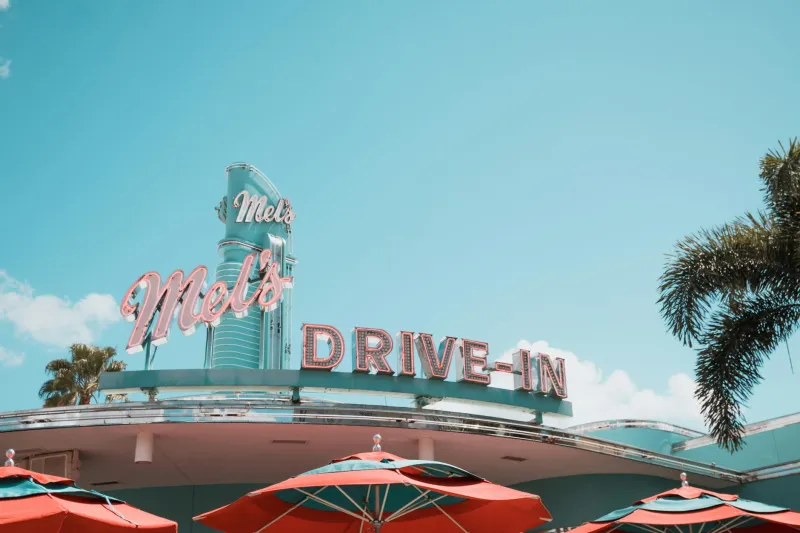
Picture this: It's 1955, and you're driving cross-country with your family in a time when roadside dining was basically Russian roulette. Would the local diner give you food poisoning? Was that motor lodge actually clean? Then you spot it on the horizon—that unmistakable orange roof with the turquoise trim, and suddenly your anxiety melts away.
That wasn't an accident. That was Howard Johnson's.
While most people today know McDonald's as the king of fast food branding, they're missing the real pioneer. Howard Johnson's didn't just stumble into becoming America's largest restaurant chain by 1965—they engineered it with a level of psychological sophistication that would make modern marketing executives weep with envy.
The Science Behind the Sunset
Howard Deering Johnson wasn't just selling fried clams and ice cream. He was selling something far more valuable: certainty. And he understood that in the split-second decision-making world of highway travel, color was his secret weapon.
The orange wasn't chosen because it looked pretty. Orange triggers specific psychological responses—it signals warmth, energy, and most importantly, safety. In an era when roadside establishments ranged from charming to genuinely dangerous, that orange roof became a promise. You knew exactly what you were getting: clean bathrooms, consistent food, and no nasty surprises on your bill.
But here's where Johnson's genius really showed: he paired that warm orange with cool turquoise accents. The combination created what psychologists call "visual tension"—your eye couldn't help but notice it, even from miles away. While competitors blended into the roadside landscape, Howard Johnson's restaurants practically jumped off the highway.
The 28-Flavor Philosophy
The famous "28 flavors" ice cream counter wasn't just about variety—it was theater. Those glass cases filled with perfectly scooped, vibrantly colored ice cream created what retail experts now call "the paradox of choice." Too many options usually overwhelm customers, but Johnson understood that the visual spectacle itself was the product.
Families would pile out of their cars, kids pressing their faces against the glass, parents feeling generous on vacation. The ice cream counter became a ritual, a reward for miles traveled. And every flavor was standardized across hundreds of locations—your kid's favorite butter brickle in Massachusetts tasted identical to the one in California.
The Franchise Formula Nobody Talks About
While Ray Kroc gets credit for perfecting the franchise model, Howard Johnson was already running the playbook two decades earlier. His "Simple Simon" mascot, standardized menus, and rigorous quality control created America's first true chain restaurant experience.
Every HoJo's followed the same architectural template: that distinctive orange roof, colonial-style cupola, and carefully planned interior layout. Johnson's operations manual was legendary—it specified everything from how to fold napkins to the exact temperature for storing butter. This wasn't just about consistency; it was about creating a brand so reliable that anxious travelers would drive past three local diners to reach the familiar orange beacon.
The Empire's Invisible Collapse
So what happened? How did America's most successful restaurant chain—larger than McDonald's, Burger King, and KFC combined at its peak—virtually disappear?
The answer reveals everything about how American dining changed. Howard Johnson's was built for the era of family road trips, when dining out was an event and travelers prioritized comfort over speed. But as air travel became cheaper and Americans grew more adventurous about food, the HoJo formula started feeling stale rather than reliable.
The chain's obsession with standardization, once its greatest strength, became its weakness. While competitors adapted their menus regionally and embraced food trends, Howard Johnson's stuck to the same fried clam plates and ice cream flavors that had worked in 1935. The orange roof that once promised exciting consistency began to signal boring predictability.
The Lessons Modern Chains Are Learning
Walk into any successful fast-casual restaurant today, and you'll see Howard Johnson's DNA everywhere. Chipotle's industrial-but-warm aesthetic? That's psychological comfort branding. Shake Shack's carefully curated "premium but approachable" vibe? That's the HoJo playbook updated for Instagram.
Even the color psychology lives on. Notice how many modern chains use orange in their branding—from Dunkin' to Whataburger to Little Caesars. They're all tapping into the same psychological triggers that Johnson discovered: orange means energy, warmth, and just enough excitement to make you pull over.
The Ghost of the American Road
Today, only a handful of Howard Johnson's restaurants remain, mostly in upstate New York and New England, serving as living museums to an era when the journey mattered as much as the destination. But their real legacy isn't in those surviving locations—it's in every carefully designed chain restaurant that understands the power of visual consistency and psychological comfort.
The next time you're driving and instinctively recognize a brand from miles away, remember the orange roof that started it all. Howard Johnson's may have faded from America's highways, but they wrote the rulebook that every successful chain still follows. They just did it first, and they did it in orange.