The Icebox Flavor Bomb That Made Cheap Meat Taste Expensive — And Then Disappeared Overnight
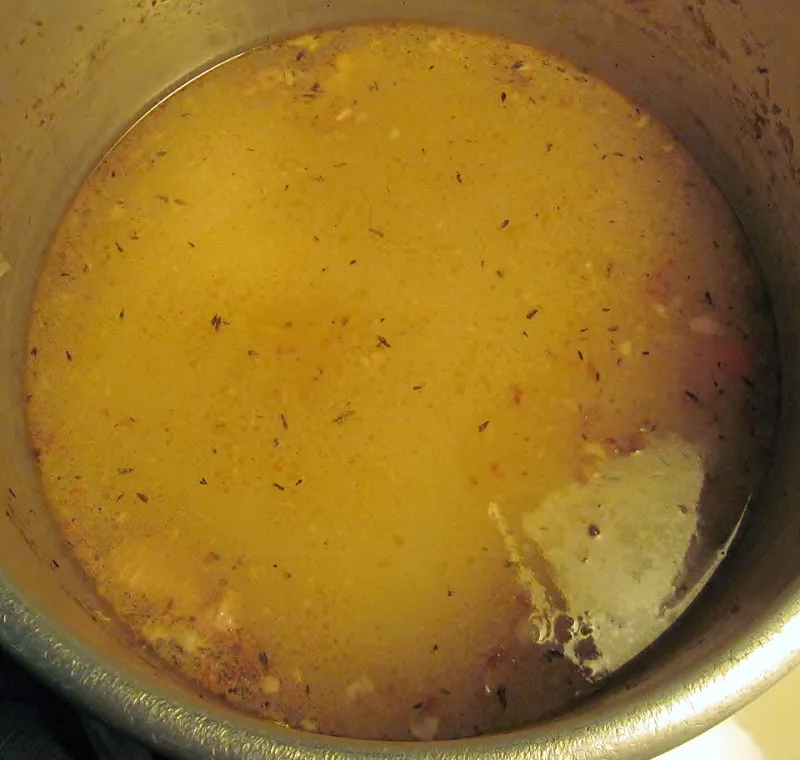
Photo: Gloria Cabada-Leman, CC BY 2.0, via Wikimedia Commons
Open almost any American cookbook published before 1940 and you'll find a recipe that barely registers today — a short set of instructions for reducing meat scraps and bones into a dark, trembling jelly that hardened in the cold and dissolved into liquid gold when heated. It went by different names depending on who was writing: potted stock, meat glaze, dripping jelly, fond de cuisine if someone was feeling fancy. Whatever you called it, it sat in a small crock in the back of the icebox, and it was quietly responsible for making ordinary weeknight cooking taste like something worth remembering.
Then the soup companies arrived, and it was gone within a generation.
What This Stuff Actually Was
To understand why meat glaze mattered, you have to understand what it contained. When you simmer bones and connective tissue for a long time — we're talking four to eight hours, sometimes more — the collagen in that tissue breaks down into gelatin. If you keep reducing that liquid, evaporating the water, concentrating everything that's left, you end up with something extraordinary: a substance so packed with savory compounds, minerals, and natural glutamates that a single teaspoon stirred into a pan sauce can transform it completely.
Professional chefs call this glace de viande — meat glaze — and it never left fine dining kitchens. But home cooks across America were making their own version for generations, and it wasn't precious or complicated. It was practical. It was what you did with the carcass after Sunday's roast chicken, the ham bone after Easter, the beef knuckles the butcher practically gave away.
The resulting jelly wasn't pretty. It was brown-black, dense, and smelled intensely savory in a way that was slightly alarming if you weren't expecting it. But dissolved into a braising liquid or whisked into a pan dripping with fond, it turned a two-dollar cut of chuck into something that tasted like it had been cooked by someone who knew things.
The Art of Cooking Poor and Eating Well
This technique wasn't born from culinary ambition — it was born from necessity. Through most of American history, waste was not an option. Bones were too valuable to throw out. Fat was rendered and stored. Vegetable trimmings went into the stockpot. And the liquid from all of it got reduced down to something shelf-stable (or icebox-stable) that could stretch flavor across an entire week of meals.
Depression-era cookbooks are full of this logic. A spoonful of meat glaze turns plain boiled potatoes into something that tastes like they were roasted alongside a prime rib. It turns a thin pan sauce into something with body and depth. It makes bean soup taste like it took all day even if it took forty minutes.
What's remarkable is how little effort the actual reduction required. You weren't hovering over it. You were just leaving a pot on the back burner while you did other things, checking it occasionally, skimming the fat, watching it slowly become something more concentrated and more powerful than what you started with. It was a background task. A habit. The kind of thing your grandmother did without thinking about it because her grandmother had done the same.
Why It Vanished So Completely
The timing of meat glaze's disappearance from home kitchens is almost too neat to be coincidence. Campbell's Condensed Soup launched its famous advertising campaigns in the late 1890s and kept pushing through the first half of the twentieth century. By the 1950s, the idea that flavor could come from a can — quickly, consistently, without any of the slow work of reduction — had become thoroughly embedded in American domestic culture.
Bouillon cubes arrived from Europe and made the pitch even simpler: just dissolve this little block and you have broth. Why spend four hours reducing bones when you could spend four seconds unwrapping a cube?
The answer, of course, is flavor — real, complex, layered flavor that no cube or can has ever actually replicated. Bouillon is salty and one-dimensional. Canned broth is thin and vaguely savory. Proper meat glaze is something else entirely: it has sweetness from the collagen, bitterness from the roasted bones, a meatiness that lingers. You can taste the difference instantly.
But convenience won the argument. It usually does.
The Chefs Who Never Stopped Making It
Here's the thing — professional kitchens never abandoned this technique. Every serious restaurant that does any kind of braised or sauced meat has some version of a reduced stock situation going on. The vocabulary changed: you'll hear demi-glace, jus lié, glace de volaille for chicken. But the underlying logic is identical to what American home cooks were doing in their Depression-era kitchens. Reduce it down. Concentrate it. Use a little to do a lot.
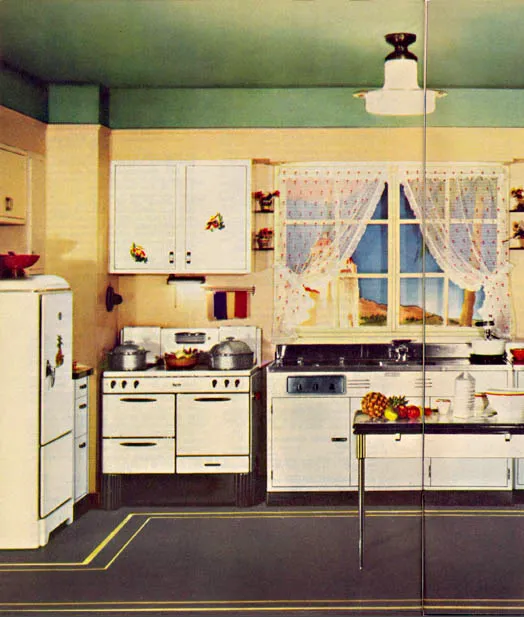 Photo: Depression-era kitchens, via i.pinimg.com
And now, quietly, home cooks are rediscovering it — partly through the bone broth movement, which got people comfortable with long-simmered bones again, and partly through a broader cultural interest in nose-to-tail cooking and reducing food waste. Instant Pots and slow cookers have made the hands-off reduction process even more accessible. You can make a rough version of meat glaze with a slow cooker and a weekend afternoon and almost zero active effort.
Bringing It Back to Your Kitchen
You don't need a restaurant setup to do this. Start with whatever bones you've been collecting — a roast chicken carcass, beef soup bones from the butcher, a pork shoulder bone. Cover them with cold water, bring everything to a simmer, skim the foam, and let it go low and slow for several hours. Strain it, return the liquid to the pot, and keep reducing over low heat until it coats a spoon thickly. Let it cool in the refrigerator. If it sets up like jello, you did it right.
Store it in a small jar. Use a teaspoon at a time. Watch what happens to your pan sauces.
Campbell's has had a good run. But the icebox jelly deserves a comeback.