Two Cities, One Sandwich, Zero Agreement: The Reuben's Identity Crisis Is Older Than You Think
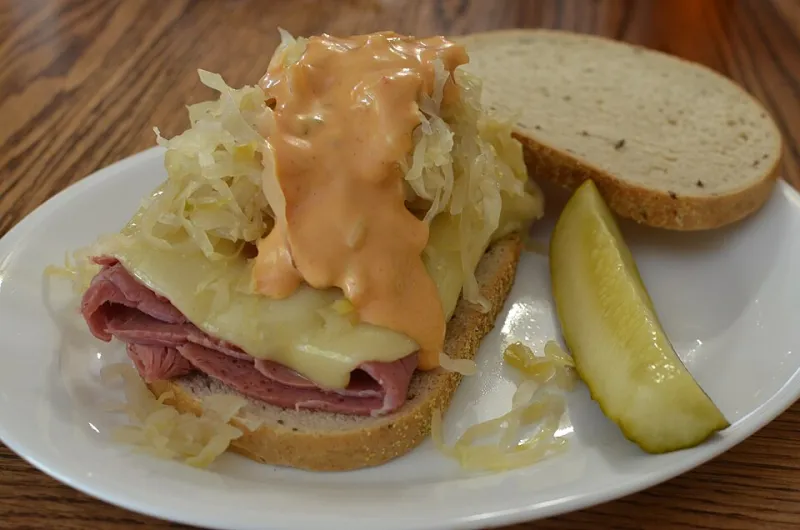
Photo: jeffreyw, CC BY 2.0, via Wikimedia Commons
Two Cities, One Sandwich, Zero Agreement: The Reuben's Identity Crisis Is Older Than You Think
Somewhere between Omaha and Manhattan, the truth about the Reuben sandwich got lost in a pile of soggy sauerkraut.
Ask most Americans where the Reuben came from and you'll get a shrug, maybe a guess about New York. Ask a food historian and you'll get an argument. Ask a competitive deli owner and you might get thrown out. The Reuben's origin is genuinely disputed, fiercely defended, and — here's the part nobody talks about — almost completely irrelevant to what most of us are eating today.
Because the sandwich that shows up on chain restaurant menus and grocery store hot bars across the country? It's not really a Reuben. It's a copy of a copy of a copy, sanded smooth of everything that made the original worth fighting over.
The Two Stories Nobody Can Agree On
Story one: It's 1925, and a poker game is underway at the Blackstone Hotel in Omaha, Nebraska. A grocer named Reuben Kulakofsky — by some accounts, a regular at these late-night card games — throws together a sandwich from whatever's available in the hotel kitchen. Corned beef, Swiss cheese, sauerkraut, rye bread. The hotel's owner, Charles Schimmel, likes it so much he puts it on the menu. Omaha has been claiming this version of events with enormous civic pride ever since.
 Photo: Blackstone Hotel, via outsidesuburbia.com
Story two: Arnold Reuben, founder of Reuben's Restaurant and Delicatessen in New York City, invented the sandwich sometime in the early 1900s — though accounts of the exact year and the specific inspiration vary depending on who's telling the tale. His daughter maintained the New York origin until her dying day.
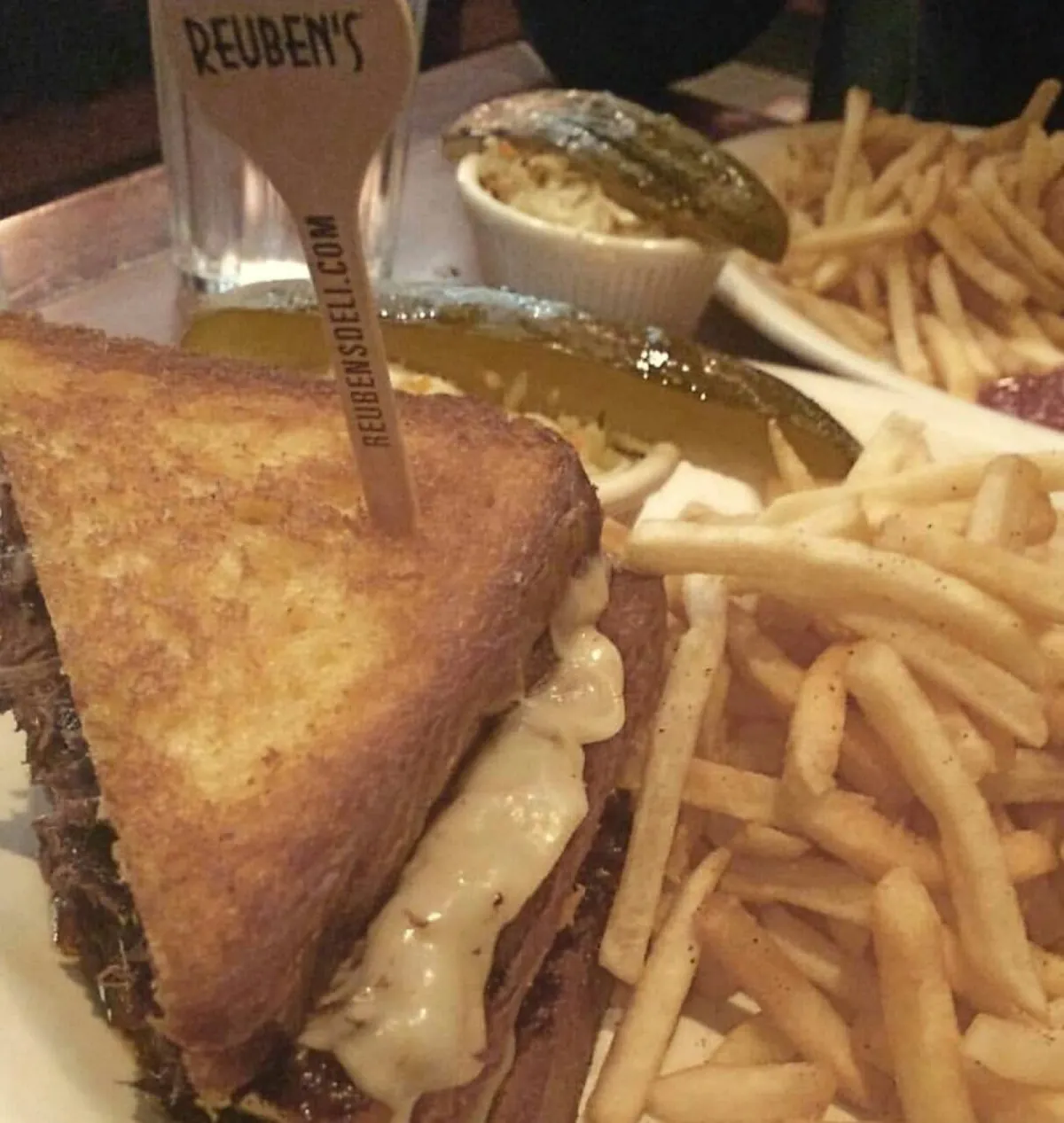 Photo: Reuben's Restaurant and Delicatessen, via ssmscdn.yp.ca
Both cities have held festivals. Both have erected plaques, metaphorically speaking. The Library of Congress has records supporting the Omaha story. New York deli loyalists consider that almost irrelevant.
Here's what's interesting though: the actual construction of the sandwich in both origin stories was a very specific, carefully balanced thing. The sauerkraut was tangy and wet. The corned beef was hand-cut, fatty, and funky. The rye bread had a bite to it. The dressing — Russian or Thousand Island, depending on the version — was applied thoughtfully, not drowned. The whole point was contrast: salt against sour, rich against sharp, soft against toasted crunch.
How Diner Culture Flattened It
The Reuben spread through American diner culture in the 1950s and 60s, and that's where the quiet transformation began. Diner operators are practical people. They're not running a deli operation. They're moving plates fast, managing food costs, and keeping a steam table warm. So adjustments got made.
The sauerkraut got drained — then drained more — until it was basically just shredded cabbage. The corned beef shifted from hand-carved slabs to pre-sliced deli packs, then to the pressed, uniform loaves that could be sliced thin and stacked quickly. The rye bread softened. The dressing got sweeter.
None of these changes were malicious. They were economic and logistical. But by the time chain restaurants got hold of the Reuben in the 1970s and 80s, the standardization process had already done most of the damage. Chains just finished the job — specifying exact weights, exact dressing quantities, exact cheese melt times — until every Reuben from Portland, Maine to Portland, Oregon tasted identical. Identically fine. Identically forgettable.
The funkiness was gone. The sourness was gone. The whole tension that made the sandwich interesting had been resolved in favor of mild, repeatable, inoffensive.
What the Real Thing Actually Tastes Like
If you want to understand what all the arguing was about, you need to find a deli that still takes this seriously. They exist — fewer than there used to be, but they're out there.
A proper Reuben built by someone who cares starts with rye bread that has actual flavor: caraway seeds, a slight bitterness, a crust that resists. The corned beef is brined long enough to develop real depth, and it's sliced thick enough that you can taste it. The sauerkraut is fermented, not just pickled in vinegar — there's a living, lactic sourness to it that cuts through the fat of the meat. The Swiss is melted just enough to bind things without smothering everything else. And the dressing is applied with restraint, because it's meant to complement, not coat.
The first bite of a Reuben built this way is almost aggressive. It's a lot happening at once. That's the point. That tension — the competing flavors that somehow resolve into something unified — is exactly what got sanded off during decades of standardization.
Why It Matters Beyond One Sandwich
The Reuben's story is really America's food story in miniature. We take something bold and regional, something that grew out of a specific culinary tradition and a specific set of ingredients, and we scale it. Scaling requires consistency. Consistency requires compromise. Compromise, repeated enough times, produces something that barely resembles the original.
It happens to barbecue. It happens to pizza. It happened to the Reuben.
The good news is that the correction is already underway. A new generation of deli operators — many of them in cities that never had strong deli traditions before — are building the sandwich from scratch, sourcing properly fermented kraut, brining their own corned beef, baking rye that actually tastes like rye. They're not being nostalgic for nostalgia's sake. They're just making the thing the way it was supposed to be made.
Omaha and New York can keep arguing about who invented it. The more urgent question is who's going to save it.
And the answer, increasingly, is the person who ordered it off a menu at a small deli that nobody's written about yet — and felt genuinely surprised by how good it was.