America's Lost Table Staple: The Pickled Powerhouse That Ruled Before Big Brands Took Over
America's Lost Table Staple: The Pickled Powerhouse That Ruled Before Big Brands Took Over
Walk into any American kitchen today and you'll find a refrigerator door packed with condiment bottles — sriracha, ranch, multiple mustards, and at least three different hot sauces. But flip through a cookbook from the 1920s, and you'll notice something missing from modern tables: piccalilli, the chunky, bright yellow relish that once sat proudly next to the salt and pepper on dinner tables across the country.
The Relish That Traveled Across an Ocean
Piccalilli didn't start as an American invention. British colonists brought the recipe — a mixture of chopped vegetables pickled in spiced vinegar — to New England in the 1600s. But like so many imported ideas, it evolved once it hit American soil. Colonial cooks started experimenting with local vegetables: green tomatoes, cauliflower, onions, and whatever else needed preserving before winter set in.
 Photo: New England, via 4.bp.blogspot.com
The name itself tells a story of cultural mixing. "Piccalilli" likely comes from "pickle" mixed with "chili," though some food historians argue it derives from the British "piccalillo." Whatever the etymology, by the 1800s, American piccalilli had become its own thing — chunkier, brighter, and more varied than its British ancestor.
The Home Canning Queen
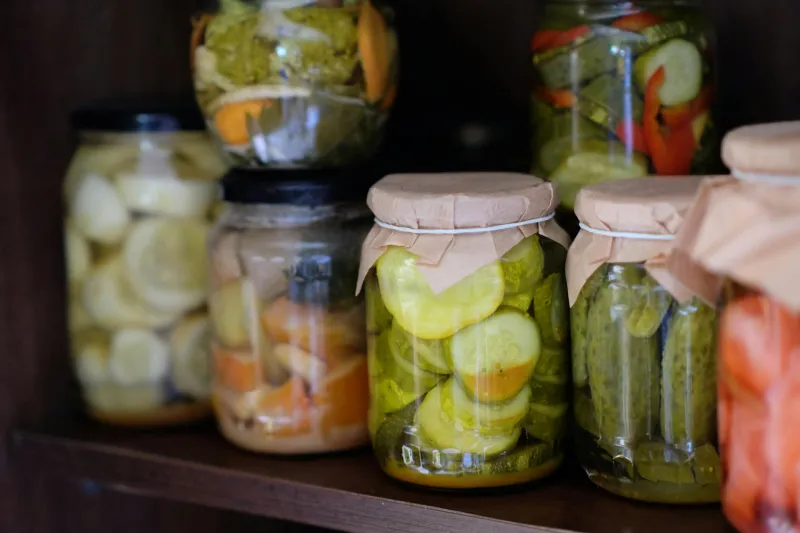
Piccalilli's golden age coincided with the rise of home canning culture in late 19th and early 20th century America. While city dwellers relied increasingly on store-bought foods, rural families — and plenty of urban ones too — spent late summer afternoons chopping vegetables and stirring massive pots of spiced vinegar.
The recipe was forgiving and practical. Got too many green tomatoes before the first frost? Piccalilli. Bumper crop of cucumbers? Into the relish pot they went. The vinegar preserved everything safely, and the bright turmeric that gave piccalilli its signature yellow color was cheap and readily available.
More importantly, piccalilli wasn't just preserved vegetables — it was flavor insurance. A spoonful could transform bland boiled potatoes into something worth eating, turn leftover roast beef into a proper sandwich, or add zing to the endless parade of casseroles that dominated American home cooking.
The Quiet Disappearance
So what happened? The same thing that happened to a lot of American food traditions: convenience culture steamrolled right over them. As supermarkets expanded and food companies perfected shelf-stable products, the time-intensive process of making piccalilli at home began to feel unnecessary.
Ketchup, with its sweet, smooth consistency and aggressive marketing, appealed to a broader range of palates. Hot sauce offered excitement without the chunky texture that some found off-putting. Meanwhile, the rise of refrigeration meant fresh vegetables were available year-round, reducing the need for preserved alternatives.
The final nail in piccalilli's coffin might have been its appearance. That bright yellow color, which once signaled quality and flavor, started looking artificial next to the "natural" colors of newer condiments. Food photography in magazines and advertisements favored sleek bottles over homemade mason jars.
The Underground Revival
But here's where the story gets interesting: piccalilli never actually died. It just went underground.
In recent years, a growing community of home fermenters, artisan food makers, and chefs have been quietly rediscovering what their great-grandmothers knew all along. Piccalilli isn't just a relic — it's a remarkably sophisticated condiment that can do things modern sauces simply can't.
Take texture, for instance. While most contemporary condiments are smooth, piccalilli's chunky vegetables add both flavor and substance to dishes. The fermentation process creates complex flavors that develop over time, unlike the one-note sweetness of commercial ketchup.
Small-batch food companies across the country are now producing their own versions, often sold at farmers markets or specialty stores. Some stick to traditional recipes, while others experiment with local vegetables or global spice blends.
Why Piccalilli Deserves a Comeback
There's something almost subversive about piccalilli in today's food landscape. While we obsess over exotic ingredients and Instagram-worthy presentations, this humble relish represents a different approach entirely — one based on preservation, practicality, and making the most of what you have.
It's also remarkably versatile. Try it on grilled cheese, mixed into potato salad, or as a topping for burgers. The acidity cuts through rich foods beautifully, while the vegetables add texture and nutrition that liquid condiments can't match.
Perhaps most importantly, piccalilli represents a connection to American food culture that predates both industrial agriculture and the current farm-to-table movement. It's proof that our ancestors were creating complex, flavorful foods long before we needed a fancy name for it.
The next time you're wandering through a farmers market or specialty food store, keep an eye out for that familiar yellow relish. Your refrigerator door might be crowded, but there's always room for a condiment with 300 years of American history behind it.