Skip the Deep-Fried Gimmick. The Real State Fair Food Is at the Folding Table in the Back
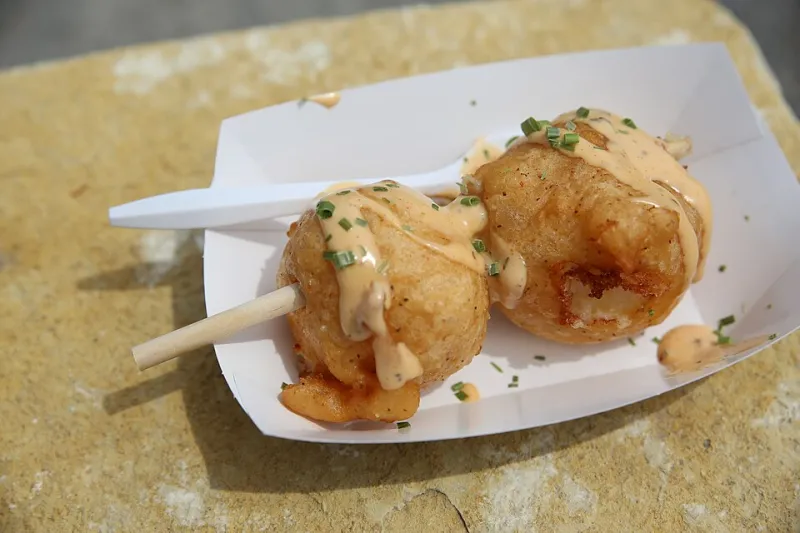
Photo: Carol VanHook from Altoona, Iowa, United States, CC BY-SA 2.0, via Wikimedia Commons
Every August and September, across fairgrounds from Minnesota to Texas, a reliable ritual plays out. Some vendor unveils a new deep-fried novelty — a deep-fried butter stick, a deep-fried energy drink, a deep-fried something-that-should-not-exist — and the food media covers it breathlessly. Lines form. Photos get taken. By the following year, nobody remembers it.
Meanwhile, forty yards away, a woman named Agnes is selling pierogi from a folding table with a handwritten sign that says "ST. STANISLAUS LADIES AUXILIARY" in marker on a piece of cardboard, and she has been doing this since 1987, and the line for her table wraps around the corner of the agricultural building, and almost none of those people are taking photos.
This is the story of the food that actually matters at American state fairs — and why it almost never appears in any coverage of them.
The Two Economies of the Fairground
State fair food exists in two completely parallel universes. The first is the commercial vendor economy: professionally operated booths, franchise agreements, health department permits that cost real money, branded signage, and the relentless pressure to offer something new each year to generate press. These vendors are businesses. They need to make money, attract attention, and justify the booth fees, which at major state fairs can run into the thousands of dollars per week.
The second economy is entirely different. It's made up of nonprofits, civic organizations, religious groups, and multigenerational family operations that have been coming to the same fair for decades, sometimes for generations, with a single dish and a survival strategy built entirely on reputation. They're not trying to go viral. They're trying to raise money for the church roof, or keep a family tradition alive, or feed their community the food that defines it.
These two economies coexist on the same fairground, but they operate by completely different logic — and the second one almost always produces better food.
Why No-Sign Food Hits Different
There's a practical reason the unmarked vendors tend to outperform the commercial ones, and it has to do with incentives. A commercial booth operator needs to move volume. They're optimizing for throughput, for consistency across hundreds of transactions a day, for a product that travels well and photographs well and satisfies in thirty seconds.
The ladies auxiliary making pierogi is optimizing for none of those things. They're making the recipe they've always made, the one that takes three days of prep, the one where the dough has to rest overnight and the filling uses a specific ratio of potato and farmer's cheese that was argued over extensively in 1974 and hasn't changed since. They're not scaling for efficiency. They're scaling for correctness.
The result is food that tastes like it was made by someone who cared whether it was good, which is a surprisingly rare quality in a commercial setting.
There's also something psychological happening. When you wait in line for a novelty item at a state fair, you're waiting because everyone else is. The food is almost secondary to the experience of participating in whatever trend is happening. When you wait in line at a folding table with a handwritten sign, you're there because someone told you specifically that this was worth it. The food is the entire point. That changes how it tastes.
The Vendors You're Looking For
They show up in recognizable patterns once you know what to watch for. Church and civic groups are the most common — Catholic parishes selling ethnic food tied to the community's immigrant heritage, Protestant congregations running barbecue pits that have been operating since before most of the attendees were born. In the Midwest, Slovak, Polish, Czech, and German social clubs maintain fair presences that stretch back decades, selling dishes that exist almost nowhere else in American commercial food culture.
At the Louisiana State Fair and the Gonzales Jambalaya Festival, Creole and Cajun family operations show up with rice dishes and stews cooked in quantities that require industrial equipment but taste entirely homemade — because they are. At the Eastern States Exposition in Massachusetts, Greek Orthodox church groups sell spanakopita and lamb dishes that draw lines of people who drove two hours specifically for that food.
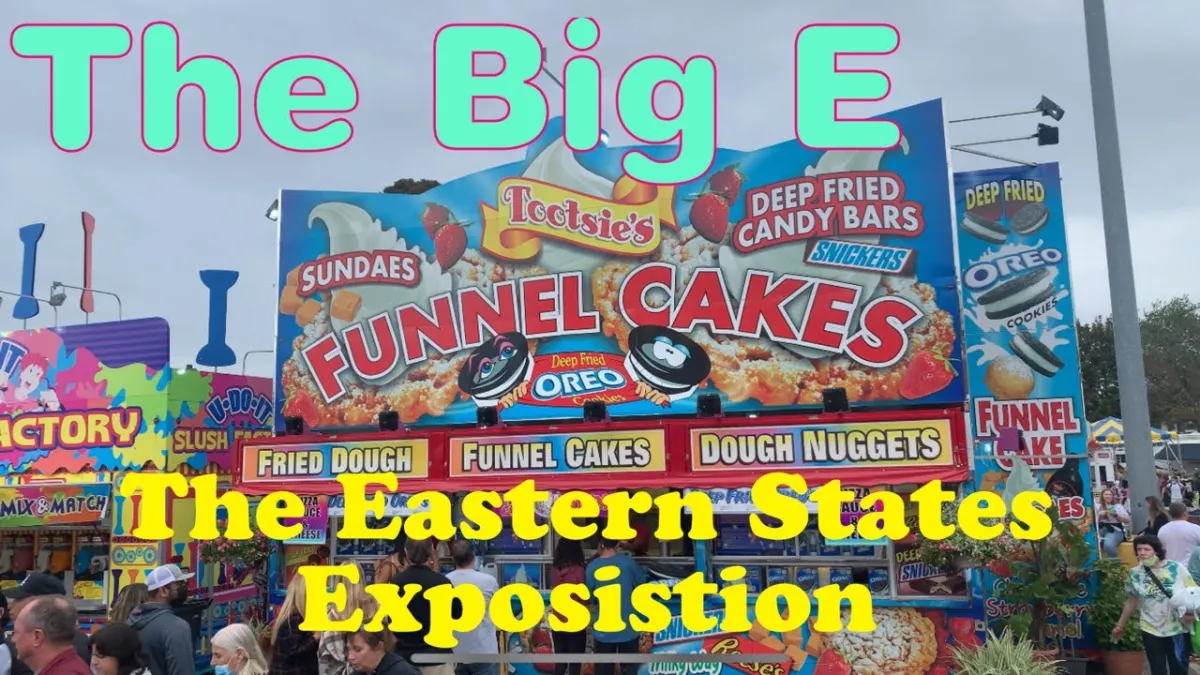 Photo: Eastern States Exposition, via i.ytimg.com
Native American tribal groups operate food stands at several Western state fairs, serving fry bread, bison, and traditional preparations that have no equivalent in any restaurant. At the New Mexico State Fair, the competition for the best green chile dish happens both officially, in the judged competition, and unofficially, among the vendors who take the rivalry extremely seriously.
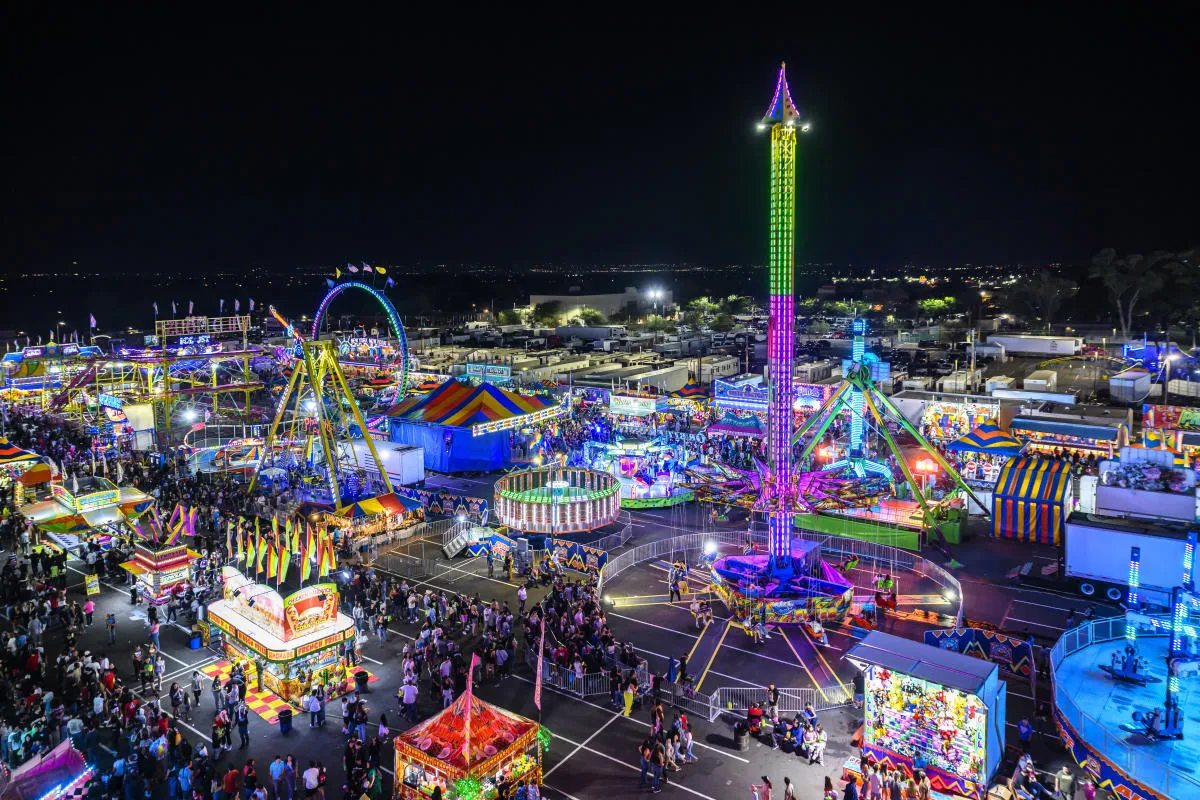 Photo: New Mexico State Fair, via assets.simpleviewinc.com
In Texas, the family BBQ operations that set up on the edges of fairgrounds — sometimes technically outside the main footprint, sometimes in a gray zone that the fair administration has quietly tolerated for thirty years — produce some of the best smoked meat in a state that takes smoked meat very seriously.
How to Find Them Before Everyone Else Does
The first rule is to arrive early and walk the entire grounds before you eat anything. Resist the pull of the first thing that smells good. Make a full lap, note every vendor, and pay specific attention to anything that looks improvised — folding tables, handwritten signs, mismatched serving equipment, operations that appear to be staffed entirely by people who know each other.
The second rule is to ask locals, not the internet. Yelp and Google will send you to the commercial vendors because those are the ones with listings. The folding-table operations don't have websites. They have regulars who come back every year and tell their families. Find someone who grew up going to that specific fair and ask them what they always get. The answer will almost never be the deep-fried novelty item.
The third rule is to follow the lines that don't make sense — the ones at booths that don't look like they should be drawing that many people. A long line at a booth with a professional banner and flashing lights is expected. A long line at a card table with a handwritten sign means something real is happening.
The Thing That Can't Be Franchised
The deep-fried novelty will be different next year. The ladies auxiliary pierogi will taste exactly the same as they did in 1987, because the recipe hasn't changed and the woman running it has been making them her whole life.
That's not inefficiency. That's the whole point. Some food exists to be discovered, not marketed — and the state fair, for all its commercial chaos, remains one of the last places in America where that kind of food can still find you.