Wisconsin's Best-Kept Secret: The Cheese That Was Engineered to Be Perfect — Then Ignored by America
Wisconsin's Best-Kept Secret: The Cheese That Was Engineered to Be Perfect — Then Ignored by America
America loves an underdog story, especially when it involves food. We celebrate the rise of craft beer, the revival of sourdough, and the comeback of heritage vegetables. But somehow, we've completely overlooked one of our own greatest culinary inventions: a cheese that was literally designed to be perfect, created right here in Wisconsin, and then mysteriously ignored by the rest of the country for nearly 150 years.
The Accidental Genius of Using Actual Bricks
The story begins in 1877 with John Jossi, a Swiss immigrant who settled in Dodge County, Wisconsin. Jossi wasn't trying to reinvent cheese-making — he was trying to solve a problem. Swiss cheese was too strong for many American palates, while American cheese was too bland for anyone who actually cared about flavor.
 Photo: Dodge County, Wisconsin, via cdn.dealeraccelerate.com
 Photo: John Jossi, via periodprints.com
So Jossi did something brilliantly simple: he created a new pressing technique using actual bricks as weights during the aging process. The constant, even pressure from those bricks created a cheese with a unique texture — firmer than Limburger but more pliable than aged cheddar. The result was something entirely new: a cheese that was mild enough for everyday sandwiches but complex enough to hold its own on a proper cheese board.
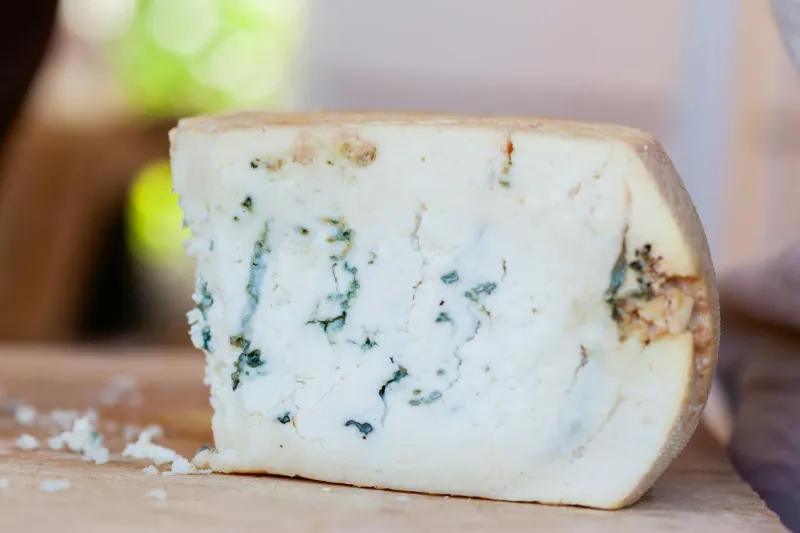
The name "brick cheese" stuck, obviously, but the technique was more sophisticated than it sounds. The brick pressing created tiny holes throughout the cheese, allowing for even aging and a distinctly smooth, almost buttery texture that no European cheese quite matched.
The Science Behind the Perfect Melt
What Jossi accidentally discovered was a sweet spot in cheese chemistry that food scientists are still trying to replicate today. Brick cheese has just the right fat content and moisture level to melt beautifully without becoming greasy or stringy. It's why Wisconsin natives swear by it for grilled cheese sandwiches — it melts into perfect, creamy layers rather than the rubbery mess you get from processed cheese or the oil slick that happens with some aged varieties.
The aging process is equally clever. Young brick cheese (aged 2-3 months) is mild and sweet, perfect for kids' sandwiches or anyone who finds cheddar too sharp. But let it age for 6-12 months, and something magical happens. The flavor develops into something nutty and complex, with hints of the funk that makes European washed-rind cheeses so prized, but without the overwhelming intensity that scares off casual cheese eaters.
The Regional Loyalty That Never Traveled
For generations, brick cheese was the default choice across the upper Midwest. Wisconsin families put it on everything — sandwiches, burgers, crackers, even melted over vegetables. It was the cheese equivalent of a reliable pickup truck: not flashy, but dependable and perfectly suited for the job.
But here's the mystery: despite being objectively excellent, brick cheese never made it beyond the Midwest. While Vermont cheddar and California jack cheese spread across the country, brick remained stubbornly regional. Even today, try asking for brick cheese at a grocery store outside Wisconsin, Minnesota, or Iowa, and you'll likely get blank stares.
Part of the problem might have been marketing. While other American cheeses developed strong brand identities — think of the Vermont cheddar mystique or the California cool of Monterey Jack — brick cheese remained humble. Wisconsin cheesemakers were too busy perfecting the product to worry about building a national brand.
The Name Game Problem
The name itself might have worked against national expansion. "Brick cheese" sounds industrial, almost like a building material rather than artisanal food. Compare that to the romance of "aged Vermont cheddar" or the sophistication of "triple-cream brie," and you can see how brick cheese got stuck with an image problem.
It didn't help that the peak years for brick cheese coincided with America's mid-century obsession with processed foods. While Kraft was spending millions promoting Velveeta and American cheese slices, small Wisconsin creameries were still making brick the old-fashioned way — by hand, in small batches, using techniques that hadn't changed much since Jossi's time.
The Artisan Comeback Story
But here's where the story gets interesting: a new generation of cheesemakers is rediscovering what Wisconsin has known all along. Small artisan producers across the country are now making their own versions of brick cheese, often calling it by different names — "American original," "pressed farm cheese," or simply "aged table cheese."
Some of the most innovative American cheesemakers are using Jossi's basic technique as a starting point, experimenting with different aging environments, local milk sources, and even alternative pressing methods. The results are cheeses that honor the brick tradition while pushing the boundaries of what American cheese can be.
Meanwhile, Wisconsin's traditional brick cheese makers are finally getting the recognition they deserve. Cheese competitions that once dismissed American originals are now featuring brick cheese categories. Food writers are discovering that this "simple" Midwest cheese can hold its own against European imports that cost three times as much.
Why Brick Cheese Deserves National Recognition
The real tragedy of brick cheese's obscurity is that it represents exactly what American food culture does best: taking good ideas from elsewhere and making them work better for local conditions and tastes. Jossi didn't just copy Swiss techniques — he adapted them for American milk, American palates, and American practicality.
In an era when we're constantly searching for authentic American food traditions, brick cheese has been hiding in plain sight in Wisconsin all along. It's proof that innovation doesn't always require exotic ingredients or complicated techniques — sometimes it just takes a Swiss immigrant, some actual bricks, and the patience to let time and pressure work their magic.
Next time you're in Wisconsin — or lucky enough to find real brick cheese elsewhere — grab a wedge. You'll taste 150 years of American ingenuity, wrapped up in what might be the most perfectly engineered cheese this country has ever produced.